Every trip to Napo Amazon EcoLodge ends the same way: twenty minutes in a motorised canoe up the Arajuno River. Our meeting point is a bridge, not a reception desk. That is the good part and the small complication at once: the best introduction the rainforest could give you, tied to a fixed hour your travel plans have to fit around.
This guide covers the whole chain: the meeting point, the hour that matters, how to get there from Quito, and what to keep within reach on the way.
Where the lodge actually is
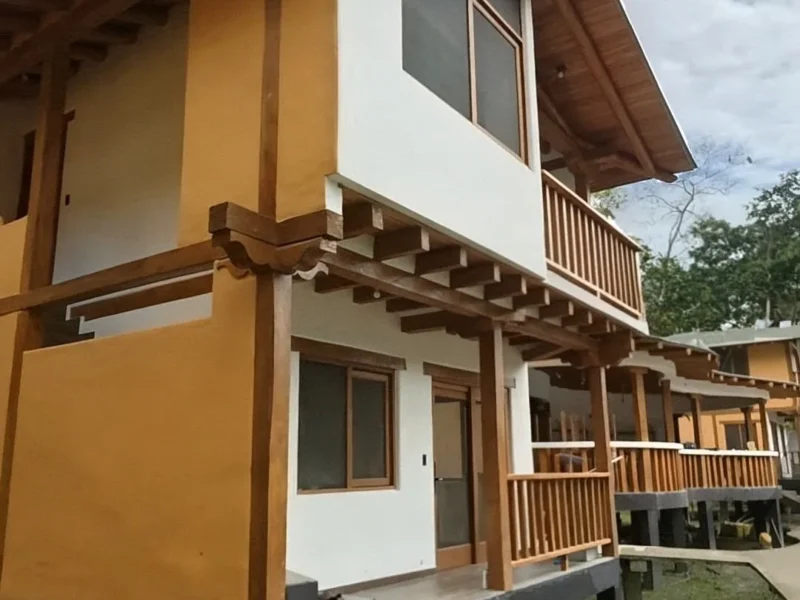
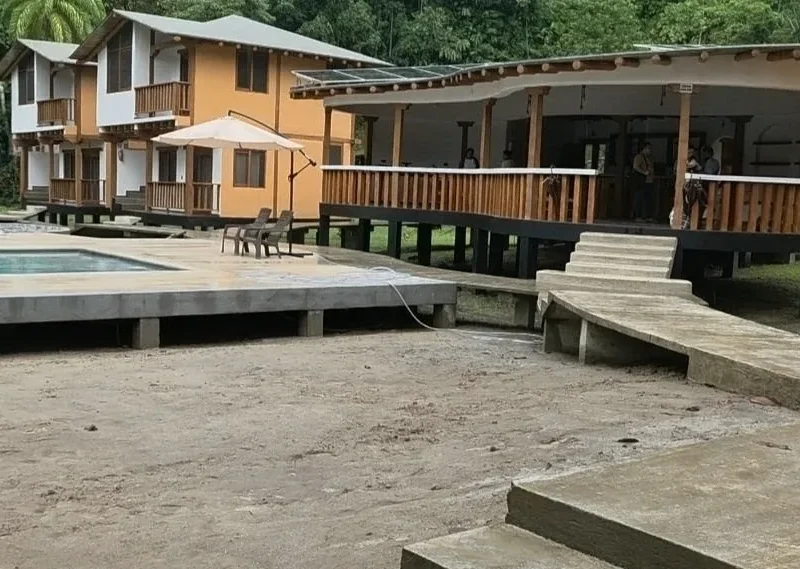
The lodge stands on the Arajuno River, in the Napo province of the Ecuadorian Amazon, near Tena. The meeting point for all our Arajuno programmes is the Arajuno River Bridge, Puente del Rio Arajuno, and from there it is roughly a 20-minute ride in a motorised canoe, zigzagging upriver with tropical forest on both banks. There is one lodge on this side of the Napo, and this is it.
The one time that matters: 12:00 at the bridge
All three of our Arajuno programmes start in the same place at the same hour:
- 2 days / 1 night: Discover the Amazon, Arajuno River Bridge at 12:00, easy, from $192 per person.
- 3 days / 2 nights: Explore the Amazon, same bridge, same 12:00, easy, from $243 per person.
- 4 days / 3 nights: Adventure in the Amazon, same bridge, same 12:00, moderate, from $354 per person.
All three depart any day of the week, so the lodge fits into your itinerary rather than dictating it. The midday meeting is the part that does not move: canoe, guide and kitchen are all planned around it, and lunch is waiting when you land.
Getting from Quito to the Arajuno River Bridge
That first leg is not included in the price of any of the three programmes, and it is what travellers most often leave until last. There are three sensible ways to solve it:
- Let us arrange it. We can organise a door-to-door transfer from Quito to the Arajuno River Bridge and back, at an extra cost. Tell us where you are staying and we quote it with the booking. Fewest moving parts, because the driver works to the same 12:00 we do.
- Drive yourself, or take private transport. Good if you are already crossing the country by road. Set off early: the route climbs out of the Andes and drops into the Amazon basin.
- Public transport to the Tena area, then a local ride to the bridge. The cheapest route, and the one needing most planning: the final leg is on you. Travel the day before and sleep nearby rather than trusting a same-morning connection.
Do not confuse it with the Cuyabeno bridge
We run Amazon programmes in two very different places and the meeting points are easy to mix up. Our 3-day Cuyabeno programme meets at Puente Cuyabeno at 11:00 a.m., far to the northeast, reached by overnight bus from Quito or by flying in the day before, and it runs on Tuesdays, Fridays and Sundays. Napo means a different river, a different bridge and 12:00 rather than 11:00. Check which one your booking says before you buy a ticket.
The canoe ride, and what to keep within reach
Twenty minutes or so in an open motorised canoe, low on the water, forest close on both sides. Life jackets are included, and so are rain ponchos and rubber boots in EU sizes 34 to 45, so bring your own if your feet fall outside that range. Rain here arrives quickly and leaves quickly, and the canoe does not stop for it. Pack so that the crossing is easy rather than anxious:
- Dry bags for gear, clothes and documents. The most useful thing in your luggage.
- A small waterproof backpack for whatever you want during the ride: camera, sunglasses, hat or cap, repellent, sunscreen, water bottle.
- Passport or ID. A copy or a photo on your phone is enough.
- A torch with spare batteries. The night walk falls on your very first evening, before you have properly unpacked.
- Cash. Entrance to the Kichwa community and the Pañayaku reserve is USD 10 per person, subject to change, paid separately from the tour.
What happens the moment you land
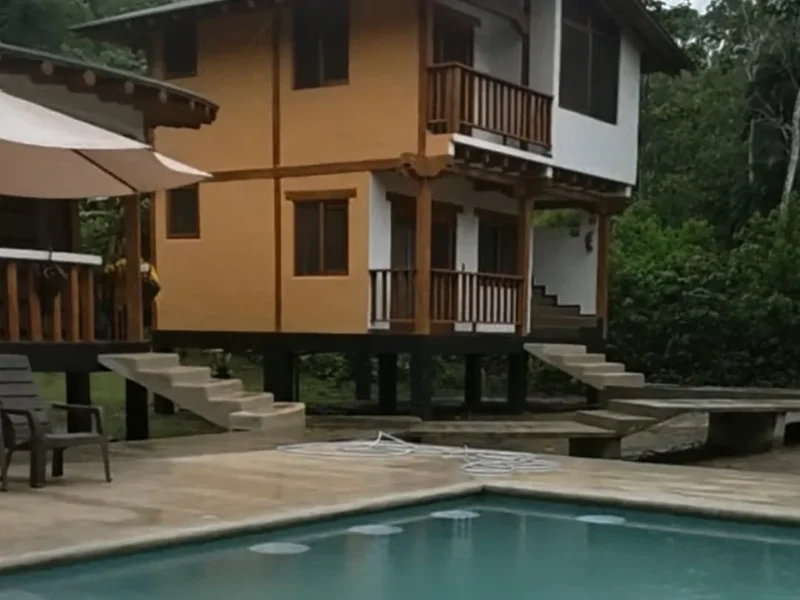
Welcome and check-in, then that self-service lunch. In the afternoon there is a one-hour interpretive hike around the lodge, where the guide explains the vegetation and how the rainforest works, followed by free time for the pool, the kayaks, the catamaran nets or a hammock by the river. Dinner, then a night walk built around the sound of the forest, when the frogs and insects take over. Breakfast is at 8:00 a.m., although on the day of the saladero clay lick you are out birdwatching well before it.
Expect solar power and no air conditioning. Every room has electricity from solar panels, and Starlink satellite internet reaches the common areas but not the rooms. Towels and biodegradable soaps are in the room, and there is a safe at reception.
Getting back out
The same route in reverse: canoe down to the Arajuno River Bridge, then the road back towards Quito. The 2-day programme finishes with lunch and check-out; the 4-day one adds a lookout before sunrise, breakfast and the chocolate workshop before the transfer to the bridge. Whichever length you choose, do not book an international flight for the day you leave the jungle. Return to Quito, sleep, then fly.
What the journey adds to the price
The prices above cover canoe transport, your room, a bilingual English and Spanish guide, full board, the excursions in the itinerary, life jackets, ponchos and boots. Budget separately for:
- The Quito transfer. Not included in any of the three programmes, in either direction.
- Community and reserve entrance. USD 10 per person, subject to change.
- Drinks, extra meals and tips. Alcoholic drinks and personal expenses are on you.
- Optional extras. Activities such as rafting or the ayahuasca ceremony are charged separately.
Book directly with the operator
We are a local Ecuadorian operator and we run these programmes ourselves, with our own bilingual guides and our own river transport, which is why we can also put a driver at your Quito hotel door and get you to the bridge for 12:00. Compare the three lengths on the 2-day, 3-day and 4-day pages, browse the rest of our tours in Ecuador, or send us a WhatsApp at +593 98 094 2338 and we will work out your travel day with you.