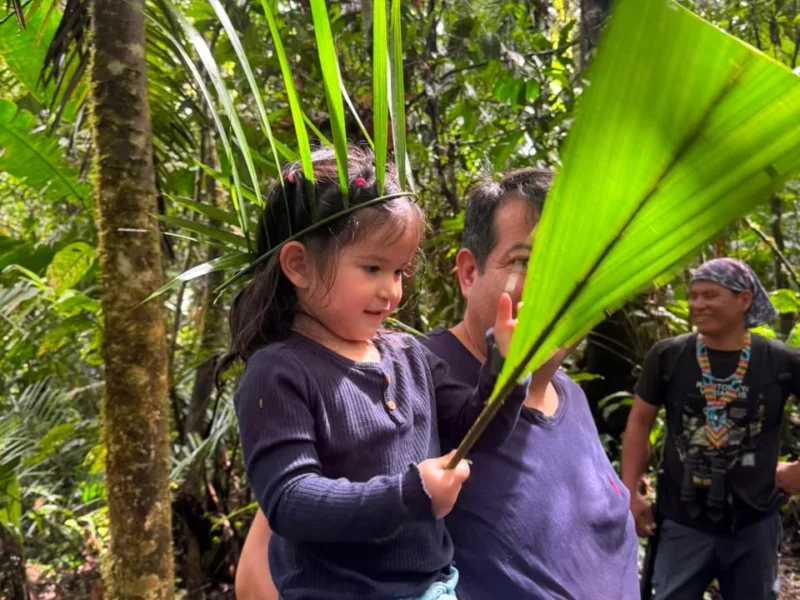
Every brochure about Amazon wildlife watching promises jaguars. The honest version is different: the rainforest is dense, most of its animals are nocturnal, shy or forty metres up in the canopy, and what you take home depends more on when you get up than on how far you travel. On the Arajuno River near Tena, that means birds at first light and frogs after dark.
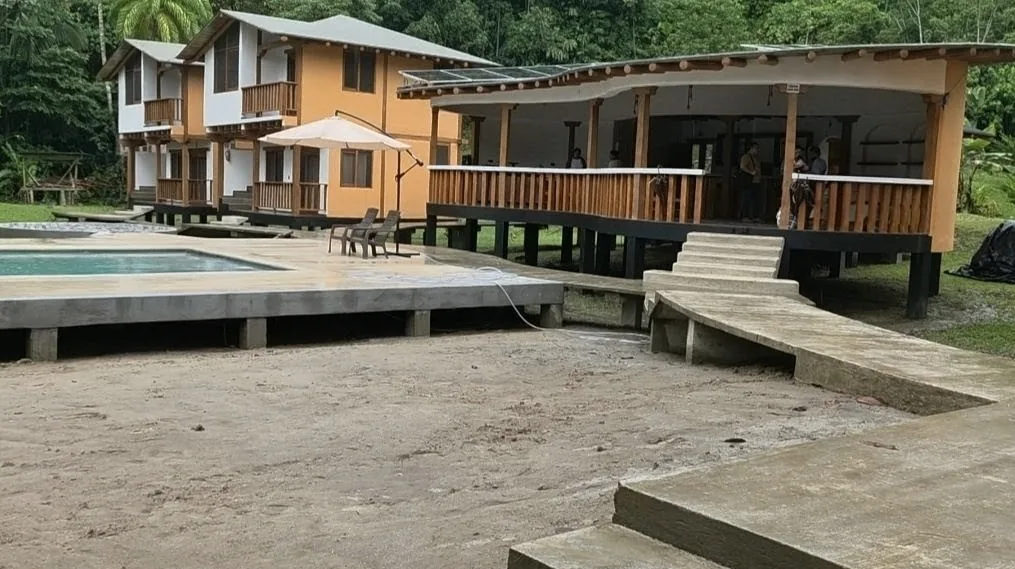
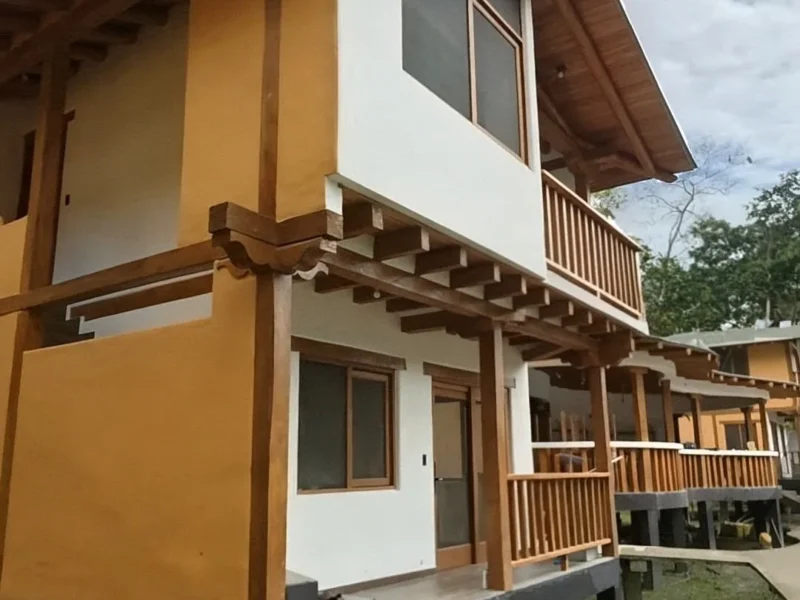
This guide covers what wildlife watching really looks like at Tena Amazon Lodge, our lodge on the Arajuno River: which activities are worth the early alarm, what to pack, and one thing we would rather tell you now than after you have booked.
The honest expectation for Amazon wildlife watching near Tena
We say this on the tour pages themselves, so we will say it here too: this part of the Ecuadorian Amazon is above all about culture, landscape and connecting with the rainforest. Wildlife sightings do happen, especially birds at the clay lick and around the Pañayaku reserve and Caiman Island, but they can be limited depending on the season.
That is not small print, it is the difference between a good trip and a disappointing one. Come for the forest, the river and the Kichwa families who live along it, and every animal is a bonus.
Dawn at the saladero, the sighting worth the early alarm
The saladero is a natural clay lick, and one of the few still preserved in the Ecuadorian Amazon. Parrots and parakeets gather there in large numbers to eat mineral-rich clay that balances their diet, and it is the most reliable wildlife event on any of our Arajuno River programmes. We go before breakfast, when the birds are most active, and the visit is on every itinerary.
Two practical notes. Binoculars are optional on our packing list, but at a clay lick they are the difference between green blobs and actual species. And volume matters more than camouflage.
The night walk, where you listen instead of look
After dinner on your first evening we go out again for a walk built entirely around sound. This is where the Amazon stops being scenery and becomes a wall of noise, with the chorus of Amazonian frogs and insects running from dusk until dawn. Your guide picks individual calls out of it and puts a name to each one.
A torch with spare batteries is on the packing list for exactly this. Bring one you can point at your own feet, because a light swept across the canopy empties it fast.
Pañayaku reserve, Caiman Island and the river itself
The main excursion of day two visits the Pañayaku reserve and Caiman Island, and on the two-day programme the Sharayaku Kichwa community as well, depending on the weather and operating conditions of that day. These are your best chance to see conservation projects, local wildlife and the natural areas that define this stretch of Napo province.
The journeys between them count too. Every activity is reached by motorised canoe, and a canoe moving slowly along a forested riverbank is one of the better wildlife hides in the Amazon. Entrance fees to the community and the Pañayaku reserve are USD 10 per person, subject to change, and are paid separately.
Forest walks and what a local guide points at
Every programme starts with a one-hour interpretive hike around the lodge on the afternoon you arrive, covering the vegetation and how the tropical rainforest works. The four-day trip adds a hike of around three hours along secondary forest trails, where the local guide explains medicinal plants, forest species and the ancestral uses of Amazonian flora. It also has the quietest moment of the lot: before sunrise on the final morning you walk to a natural lookout to watch the jungle wake up, with breakfast waiting at 8:00 a.m.
What to bring for the wildlife, specifically
- Binoculars: listed as optional, but the one item that most changes what you see at the clay lick.
- A torch with spare batteries: for the night walk, and for the way back afterwards.
- Long-sleeved shirts and repellent: the hours when animals are active are also the hours when insects are.
- A small waterproof backpack and dry bags: for camera gear, clothes and documents on the canoe rides.
Rubber boots, rain ponchos and life jackets are provided in EU sizes 34 to 45, so bring your own boots if your size falls outside that range. Every room has electricity from solar panels, so charging a camera is never a problem.
Which programme suits a wildlife-focused trip
- 2 days / 1 night, from $192 per person, easy: Discover the Amazon. One night walk and one dawn at the saladero, plus Pañayaku, Caiman Island and the Sharayaku community as conditions allow.
- 3 days / 2 nights, from $243 per person, easy: Explore the Amazon. The same wildlife activities plus a full afternoon in the Kichwa community of San Bartolo Sharayaku and a chocolate workshop.
- 4 days / 3 nights, from $354 per person, moderate: Adventure in the Amazon. Adds the three-hour forest hike, the sunrise lookout and a morning of tubing or kayaking.
All three meet at the Arajuno River Bridge at 12:00 and reach the lodge after a twenty-minute motorised canoe ride. They run any day of the week, with a bilingual English and Spanish guide, full board and all river transport included. The journey from Quito to the bridge is not included, though we can arrange a door-to-door transfer at extra cost.
If wildlife is the whole reason you are coming
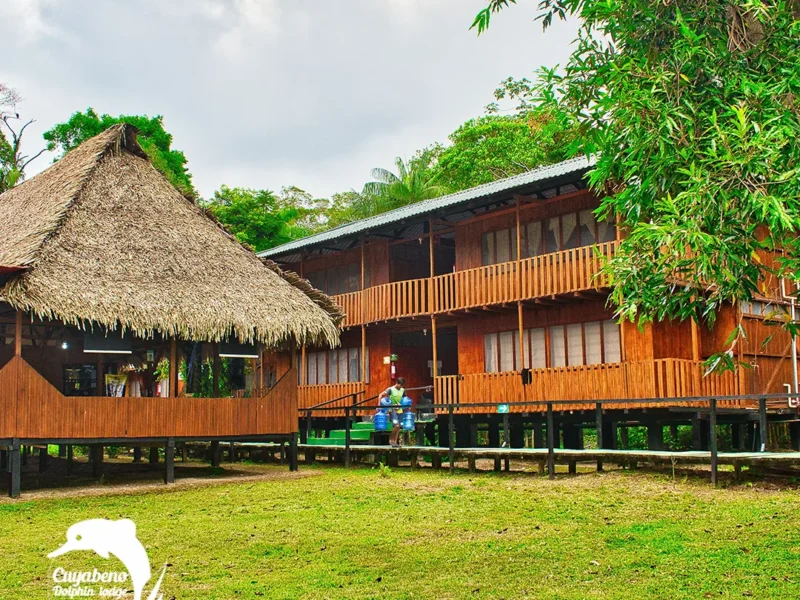
Then look further east, to Cuyabeno. Our four-day Cuyabeno jungle and community tour is our best seller: lagoon paddling, a day with the Siona of Tarabeaya, waters where pink dolphin sightings are possible and a bilingual naturalist guide, from our own lodge inside the reserve. Getting there asks more of you, since the meeting point is the Cuyabeno River Bridge at 11:00 a.m., reached by overnight bus from Quito or by flying in the day before.
The Arajuno River wins on access and comfort. Cuyabeno wins if the animals are the point.
Ready to hear the forest at night?
We are a local Ecuadorian operator with fifteen years behind us, our own guides and our own lodge on the Arajuno River, so the programme you read here is the one we run ourselves. Check dates on the 3-day Arajuno River page, compare the full range on our tours page, or send us a WhatsApp at +593 98 094 2338 and we will tell you honestly what the forest is likely to be doing the week you arrive.