Sustainable tourism is the most overused phrase in the Amazon travel business. Almost every lodge claims it, yet very few explain what it means in practice. Meanwhile, the traveller has no way to check. The useful version of the answer is duller than the brochure one. In short: where the electricity comes from, who guides you and where the money goes on the ground. Also, what happens to the soap you wash with.
This guide uses our own operation on the Arajuno River, in Napo province, as a worked example. Tena Amazon Lodge is our lodge, and we run the programmes ourselves with local guides. So everything below is a detail you can hold us to when you arrive.
Start with the infrastructure, not the adjectives
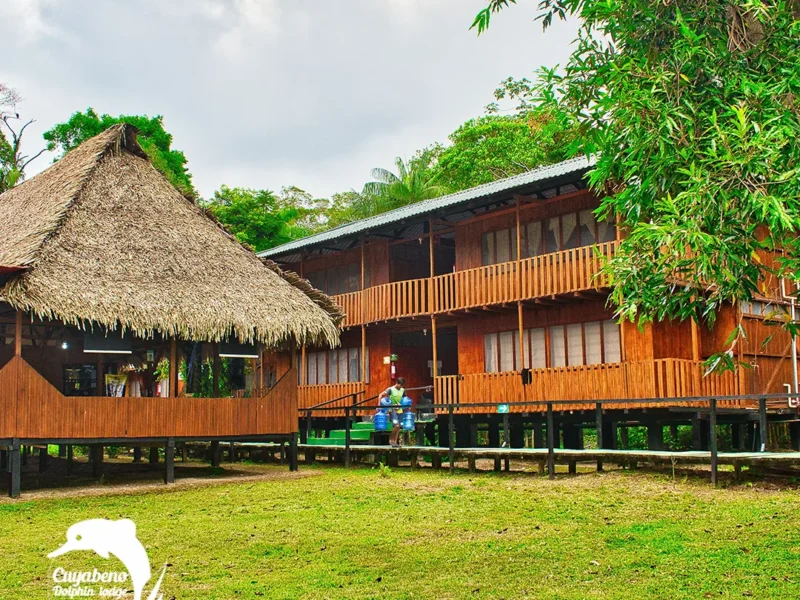
The claims are either true in the wiring and the plumbing or they are not true at all. Here is what is in place at the lodge, the same on every one of our Arajuno River programmes:
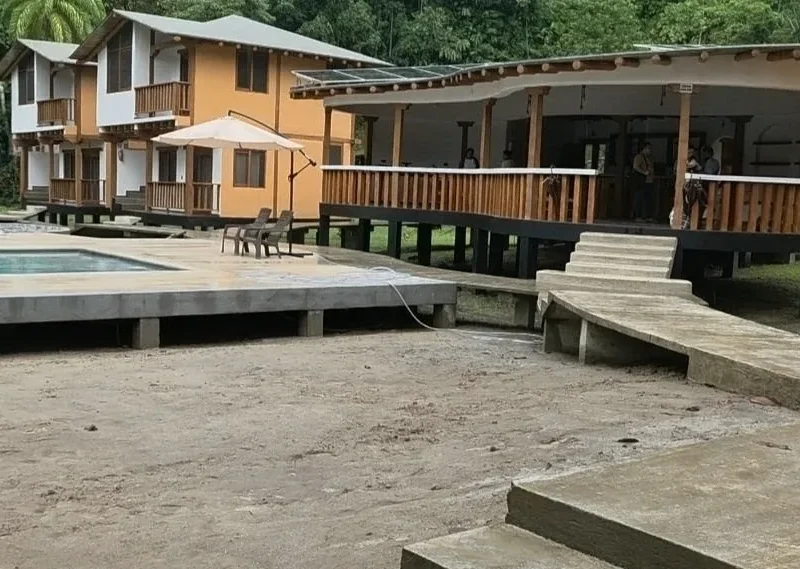
- Solar power: electricity in every room comes from solar panels.
- No air conditioning: there is none, anywhere. You sleep with the sound of the forest instead, which is part of what keeps the place quiet.
- Biodegradable toiletries: the room comes with towels, shampoo and biodegradable soaps. Whatever you wash off here goes back into a living river system.
- Internet by design: Starlink satellite internet reaches the common areas only. There is no internet in the rooms, and that is deliberate.
- Water without the plastic: the dining areas have unlimited water, coffee and tea dispensers, included in the rate. Also, our packing list asks you to bring a reusable bottle.
- Kit you do not have to buy. We include life jackets, rain ponchos and rubber boots in EU sizes 34 to 45. So nobody has to buy single-use gear for four days in the jungle. Bring your own boots if your size falls outside that range.
The community day is the programme, not a photo stop
On our 3-day and 4-day Arajuno programmes you spend a full afternoon in San Bartolo Sharayaku. It is a Kichwa community of Arajuno. First, the community leader introduces the families, and you take part in traditional chicha brewing. Then comes an optional toast with guayusa tea and fermented chicha. The families also perform Amazonian dances in traditional dress. After that, a tulpa workshop cooks maito, yuca and the staple foods of the community. Everyone then eats together at the pambamesa, and there is time to buy handicrafts made by the families themselves.
Two things worth knowing before you book. Entrance fees to the community and to the Pañayaku reserve are USD 10 per person, subject to change. Also, you pay them separately from the tour price. And the artisanal chocolate activity means drying, roasting, grinding and tasting cacao with the techniques local families use. It may fall on a different day than the itinerary suggests, but it always happens.
What you will really see, and what you will not
Honesty about wildlife is a sustainability question too, because inflated expectations are what push operators into baiting animals and chasing sightings. So we say it on the tour pages themselves. This part of the Amazon is above all about culture, landscape and connecting with the rainforest. Also, wildlife sightings can stay limited depending on the season.
What is reliable is the saladero, a natural clay lick. In fact, it is one of the few that survive in the Ecuadorian Amazon. We go before breakfast, when parrots and parakeets gather in numbers to eat the mineral-rich clay that balances their diet. The same excursion takes in the Pañayaku reserve and Caiman Island. However, that depends on the weather and the operating conditions of the day. Add the night walk built around the chorus of frogs and insects, plus the interpretive hike on the first afternoon. Then you get a picture of the forest that does not depend on one lucky animal crossing the trail.
How to be a low-impact guest
- Bring the right soap: our packing list asks for biodegradable or natural soap and shampoo. At a river lodge this is the single easiest thing a traveller can get right.
- Carry a reusable bottle: the dispensers are unlimited. So one bottle removes most of your disposable waste for the whole stay.
- Buy directly from the community: the handicrafts on sale after the pambamesa come from the families themselves. In fact, you have just spent the afternoon with them.
- Stay put and go slow: the lodge sits 20 minutes by motorised canoe from the Arajuno River Bridge. Also, every activity runs from there. One river, one lodge, no daily transfers.
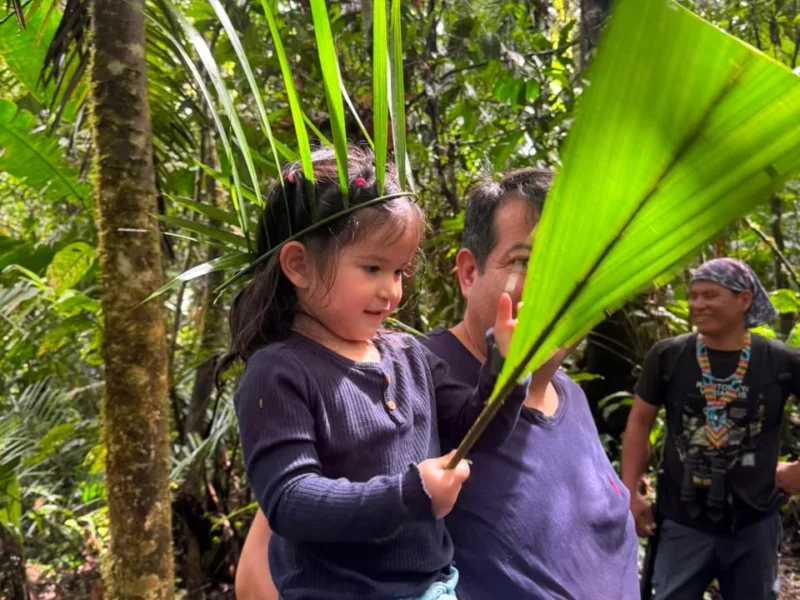
- Listen on the trails: on the 4-day programme a local guide leads the three-hour hike through secondary forest. The guide explains the medicinal plants and the ancestral uses of Amazonian flora, because that knowledge is theirs.
- Skip what you do not understand: extras such as rafting or the ayahuasca ceremony carry a separate charge. Also, they are never part of the programme by default.
Which Arajuno River programme fits you
- 2 days / 1 night, from $192 per person: rated easy. Interpretive hike, night walk and the saladero at dawn. Then the Pañayaku reserve, Caiman Island and the Sharayaku Kichwa community, depending on conditions. See Discover the Amazon.
- 3 days / 2 nights, from $243 per person: rated easy. Adds the full afternoon in San Bartolo Sharayaku and the artisanal chocolate workshop. See Explore the Amazon.
- 4 days / 3 nights, from $354 per person: rated moderate and the most active of the three. Tubing, kayaking or paddling on the Arajuno, plus the three-hour forest hike and the community afternoon. On top of that, the chocolate workshop and a pre-dawn walk to a natural lookout. See Adventure in the Amazon.
All three meet at the Arajuno River Bridge at 12:00 and reach the lodge by a 20-minute motorised canoe ride. Departures run any day of the week. Also, full board, a bilingual guide and all river transport come included. The rate does not cover the journey from Quito to the bridge. However, we can arrange a door-to-door transfer at an extra cost. The full list sits on our Tena and Napo River page.
Travel with the people who run the lodge
We are a local Ecuadorian operator, and Tena Amazon Lodge is our own lodge on the Arajuno River. Also, the guides are from this region. So we can tell you before you pay what the season will and will not give you. Check dates on the 3-day Arajuno River programme, or browse the rest of our tours in Ecuador. Better yet, send us a WhatsApp at +593 98 094 2338. Then we will tell you straight which length suits your trip.