Every Galapagos trip begins with the same decision: which islands. People live on only a handful of them, and the rest is national park with fixed visitor sites, so no single route covers the whole archipelago. That means the question is not really which one island wins. The best Galapagos islands for your trip are the ones your itinerary can actually reach, and that depends on where you sleep: a hotel on an inhabited island, or a boat that sails at night.
Below is what each main island holds, and how you get to it.
How to choose the best Galapagos islands for your days
Almost every place you will stand on is a National Park visitor site, reached by boat with a naturalist guide licensed by the Galapagos National Park. That one fact decides everything else. From a hotel you reach whatever a day’s sailing allows. From a boat you reach whatever the night’s crossing puts within range.
So the best Galapagos islands for a five-day trip are not the same as the best ones for eight. Read the island notes below with your number of days in hand, then pick the format at the end.
Santa Cruz: the island almost everyone lands on
Santa Cruz rarely tops anyone’s shortlist of the best Galapagos islands, yet almost every trip begins and ends here. Most programmes land at Baltra Airport and cross the Itabaca Channel, and nearly all the hotels, restaurants and boat connections cluster around Puerto Ayora. Three of our four island hopping routes start from Baltra, with an 11:00 pick-up that reaches the highlands the same afternoon.
- El Chato highlands: the dependable place to see giant tortoises roaming free rather than behind a fence, beside lava tunnels that show how the islands took shape.
- Los Gemelos: two vast volcanic sinkholes ringed by endemic vegetation where Darwin’s finches feed. Usually the last stop before the flight home.
- Charles Darwin Research Station: giant tortoises in captivity, the hatchling breeding centre, Lonesome George and the conservation exhibition hall. It falls on day 4 of the six-day route that ends in Santa Cruz.
- Las Grietas: deep volcanic channels of clear water, a 20-minute walk from the hotel, visited the same afternoon as Playa de los Alemanes.
- Pinzon and Santa Fe: 50 minutes’ sailing for two snorkels with reef sharks, sea turtles, rays and sea lions, then La Fe beach, where turtles nest from November to February.
Isabela: penguins, flamingos and Los Tuneles
Isabela is the largest island in the archipelago and, of the inhabited four, the one that most often earns a place on lists of the best Galapagos islands for wildlife. It sits two hours by speedboat from Puerto Ayora and repays the crossing. Our five-day Santa Cruz and Isabela island hopping programme gives it two full days.
- Tintoreras islet: a 45-minute walk among nesting marine iguanas, white-tip reef sharks and sea lions, then a snorkel in the bay and a short boat ride out to the penguins and blue-footed boobies.
- Arnaldo Tupiza Breeding Centre: one of the best giant tortoise breeding centres in the archipelago.
- The wetlands: a large brackish lagoon holding the biggest flamingo population in Galapagos.
- Los Tuneles at Cabo Rosa: a maze of lava islets and shallow volcanic tubes where sharks and sea turtles nest. The guide leads you through clear water past reef sharks, seahorses and turtles, and it is one of the best places anywhere to swim with Galapagos penguins.
Los Tuneles is calm water, so it works with children. One detail people forget, though: there are no ATMs on Isabela. Carry cash in US dollars.
San Cristobal: sea lions and the only hammerhead snorkel
San Cristobal has its own airport, so it usually opens or closes a trip. Punta Carola, Cerro Tijeretas and La Lobería all put you in warm water beside a sea lion colony straight from the sand, and La Lobería holds the biggest colony on the island.
The draw, though, is Kicker Rock, or Leon Dormido, 40 minutes’ sailing from Puerto Baquerizo Moreno. It is the only site in Galapagos where you can snorkel with hammerhead sharks, turtles and sea lions. Nobody can promise the sharks; it is simply the only address where they are on the table.
The same day continues to Cerro Brujo, red-footed boobies at Punta Pitt, and a swim in the lava pool at Rosa Blanca Bay. All three routes we run through San Cristobal include it, starting with the five-day Santa Cruz and San Cristobal route, and continuing on both six-day programmes.
Española: the albatross island
Española sits two hours’ sailing south of San Cristobal. It is one of the oldest islands in the archipelago and the only nesting ground in the world for the waved albatross, which makes it the single best day of a six-day programme.
The walk lasts around two hours over uneven volcanic ground, past nesting marine iguanas and blue-footed and masked booby colonies. From May to December the albatrosses are there to breed, flown in from the mainland. Then it is 30 minutes to Gardner islet to snorkel with turtles, sea lions and rays. Bring closed shoes with grip, and binoculars if birds are why you came.
A full day, two hours’ sailing each way, so it only fits a six-day trip: Santa Cruz, San Cristobal and Española, or San Cristobal, Española and Santa Cruz, which runs the same islands in reverse and adds the Darwin Station and Las Grietas. Both are open-jaw, so you fly into one airport and home from the other. Cruises, meanwhile, land at Gardner Bay and Suarez Point, with its blowhole and red marine iguanas.
The best Galapagos islands you can only reach by cruise
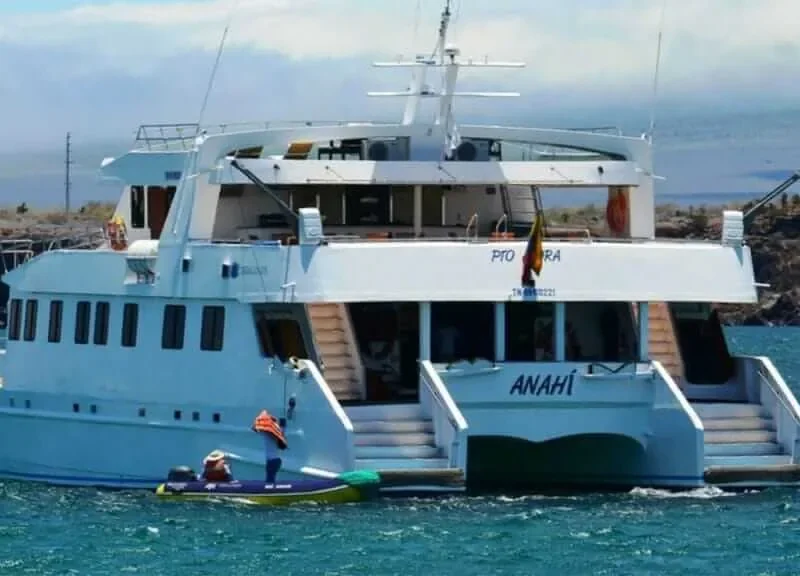
Some of the finest sites sit too far from the inhabited islands for a day trip. Because neither Genovesa nor Fernandina has a town, you have to sail through the night to get there. These two are the reason people pay for a cabin.
- Genovesa: the seabird island of the north, a full day split between Darwin Bay and El Barranco. It is day two of the four-day A route on the Nemo II catamaran.
- Fernandina: Espinoza Point, the rawest volcanic corner of the archipelago, always paired with the western coast of Isabela. The Eden yacht cruise reaches it on the six-day B route, departing Tuesday, and the eight-day D route, departing Sunday. Both also add Moreno Point, Elizabeth Bay and Tagus Cove.
If the west is the point of your trip, check the route length. The western volcanoes only appear on the longer programmes. The Treasure of Galapagos cruise, for instance, covers them on a seven-day route out of Baltra on Saturdays, and that itinerary adds the Wall of Tears and Vicente Roca Point.
Floreana, Santiago and the smaller stops
Cruises fill their remaining days with islands you cannot stay on. None of these carries a trip by itself, but together they are what separates a cabin from a hotel room.
- Floreana: the flamingo lagoon and green-sand beach at Cormorant Point, the Baroness Lookout, the sunken cone of Devil’s Crown, and Post Office Bay, where the wooden mail barrel still works. You leave a letter, and another traveller hand-delivers it. The Aida Maria yacht cruise covers all of them in one day.
- Santiago: the black lava fields of Sullivan Bay, usually paired with Rabida or Bartolome. The five-day A route of the Treasure puts Bartolome and Sullivan Bay together on day 2, out of Baltra on Fridays.
- North Seymour: frigatebird and blue-footed booby colonies at close range, often combined with the volcanic cone of Chinese Hat.
- South Plaza and Santa Fe: land iguanas, prickly-pear cactus forest and a sheltered snorkelling bay, usually on one day.
Island hopping or a cruise: which reaches more
Your shortlist of the best Galapagos islands decides the format, not the other way round. Both work; they simply reach different places.
- Island hopping: you sleep on land, in a hotel with air conditioning, and the days revolve around yacht excursions and snorkelling. The package covers breakfast and lunch, snorkel gear and towels, and a naturalist guide licensed by the Galapagos National Park. Departures run daily. Dinners are on you, so you eat in the ports.
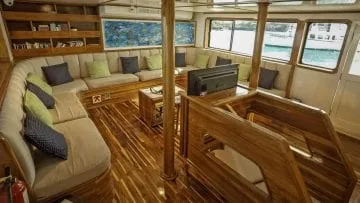
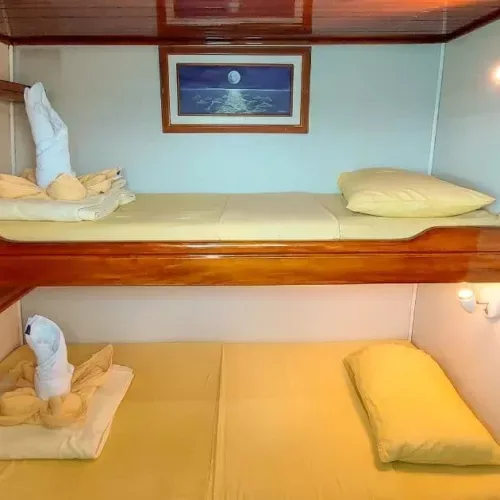
- Cruises: you wake up at a new visitor site every morning, and all meals come on board from lunch on day 1. Routes run from four to fifteen days, and each itinerary has a fixed departure day.
In practice, the rule is simple. If your list is Santa Cruz, Isabela, San Cristobal and Española, island hopping works and you sleep on land. If Genovesa, Fernandina, Floreana or Bartolome are on it, you need a Galapagos cruise instead.
Fees and packing, whichever islands you pick
Two fees are compulsory and never part of any Galapagos programme. The National Park entrance costs USD 200 per person, or USD 30 for Ecuadorian nationals. The Transit Control Card costs USD 20 and is subject to change. You pay both on arrival, and you need your passport for the card. Flights to the islands are not included either.
- Reef-safe sunscreen, hat and sunglasses: you are on the equator and mostly on the water.
- Swimwear, a quick-dry change and a windbreaker: snorkels start off the beach, and the two-hour crossings are colder than the beaches suggest.
- Closed shoes with grip and cash in US dollars: shoes for Española, dollars for dinners, tips and everything on Isabela.
Build your island list with us
We are a Quito operator with fifteen years of Ecuador behind us, and we handle these Galapagos programmes directly. So whoever answers your message books your guide, hotel or cabin. You book direct, with no marketplace in the middle, and you get a straight answer about which islands fit your days.
Start with the five-day Santa Cruz and Isabela programme, or compare every route on our tours in Ecuador page. You can also send us a WhatsApp at +593 98 094 2338. Tell us how many days you have and which of the best Galapagos islands you want on the list, and we will build the route around them.