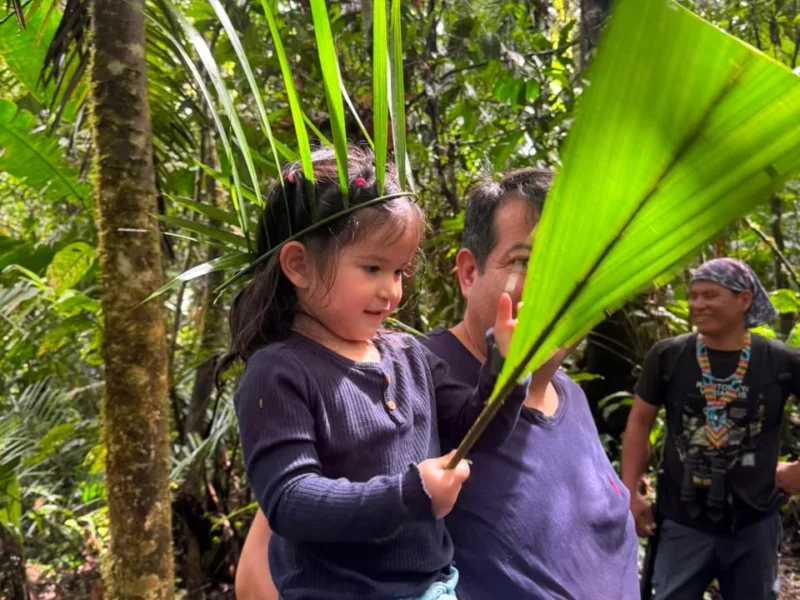
Why visit Napo? Ecuador has two very different doors into the Amazon. One is the far northeast, deep in the Cuyabeno lagoons. The other is Napo province, where the Andes drop away into rainforest, Tena sits as the regional capital and the Arajuno River winds east through the trees. Napo is the closer door, and for most travellers it is the one that actually fits the trip they already have planned.
Here is what makes Napo worth a visit: what this side of the Ecuadorian Amazon is genuinely good at, what it is not, and how many days you need for the journey to be worth it.
The Amazon you can reach without losing a week
All three of our Napo programmes start the same way. The meeting point is the Arajuno River Bridge (Puente del Rio Arajuno) at 12:00, and from there it is a 20-minute motorised canoe ride, zigzagging along the river, to Tena Amazon Lodge. No internal flight, no full day of transit before the trip begins.
Two practical notes. Departures run any day of the week, so Napo fits around the rest of your itinerary instead of dictating it. And the journey from Quito to the Arajuno River Bridge is not included in the tour price, although we can arrange a door-to-door transfer at an extra cost. Ask about it when you book rather than the night before.
Parrots at the clay lick, before breakfast
The saladero is the reason to set an alarm. It is a natural clay lick, one of the few still preserved in the Ecuadorian Amazon, and parrots and parakeets gather there in large numbers to eat mineral-rich clay that balances their diet. We go early, when the jungle is at its quietest and the birds are most active, and breakfast waits until afterwards. Every one of our Napo programmes includes it.
A community day, not a photo stop
On the three and four day programmes, a full afternoon goes to the San Bartolo Sharayaku community of Arajuno. It is not a fifteen-minute stop for pictures:
- Introductions first: the community leader presents the families before anything else happens.
- Chicha, brewed in front of you: traditional brewing, then an optional toast with guayusa tea and fermented chicha.
- Amazonian dances: performed in traditional dress.
- The tulpa workshop: cooking maito, yuca and the community’s staple foods.
- Pambamesa: the shared meal, everyone eating together from the same spread.
- Handicrafts: time to buy directly from the people who made them.
On the two day programme the second morning visits the Pañayaku reserve, Caiman Island and the Sharayaku Kichwa community, depending on the weather and the operating conditions of that day. Entrance fees to the community and the Pañayaku reserve are USD 10 per person, subject to change, and are paid separately from the tour price.
Cacao from tree to cup
The artisanal chocolate activity runs on the three and four day programmes, and it takes you through drying, roasting, grinding and tasting, learning the traditional techniques used by local families. On the three day programme the day it falls on can move, but it always takes place.
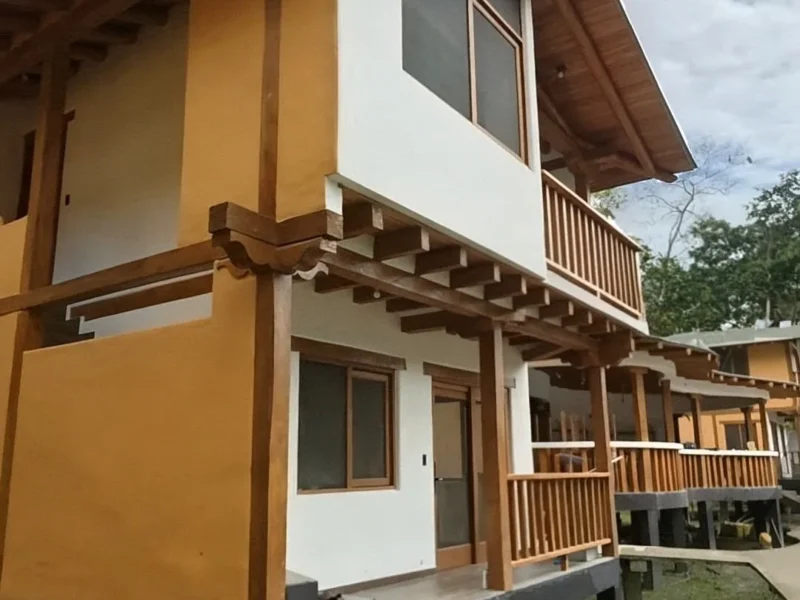
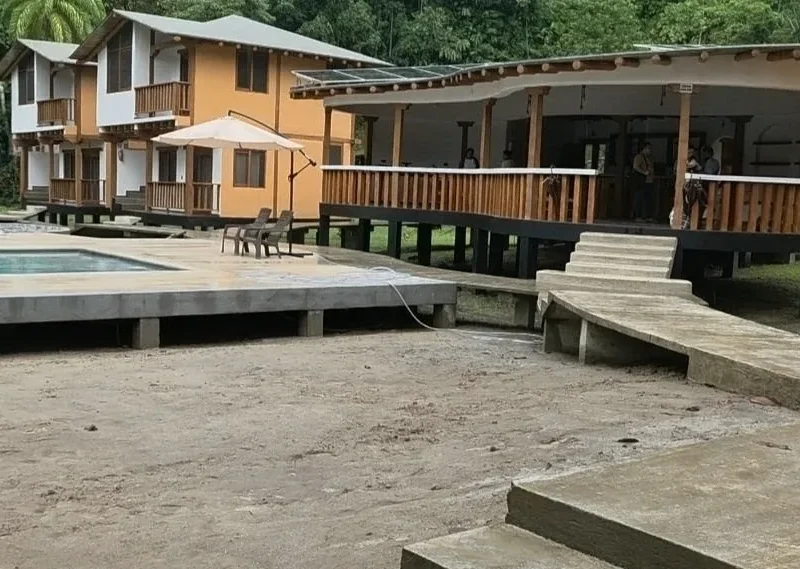
Our lodge: solar power and no air conditioning
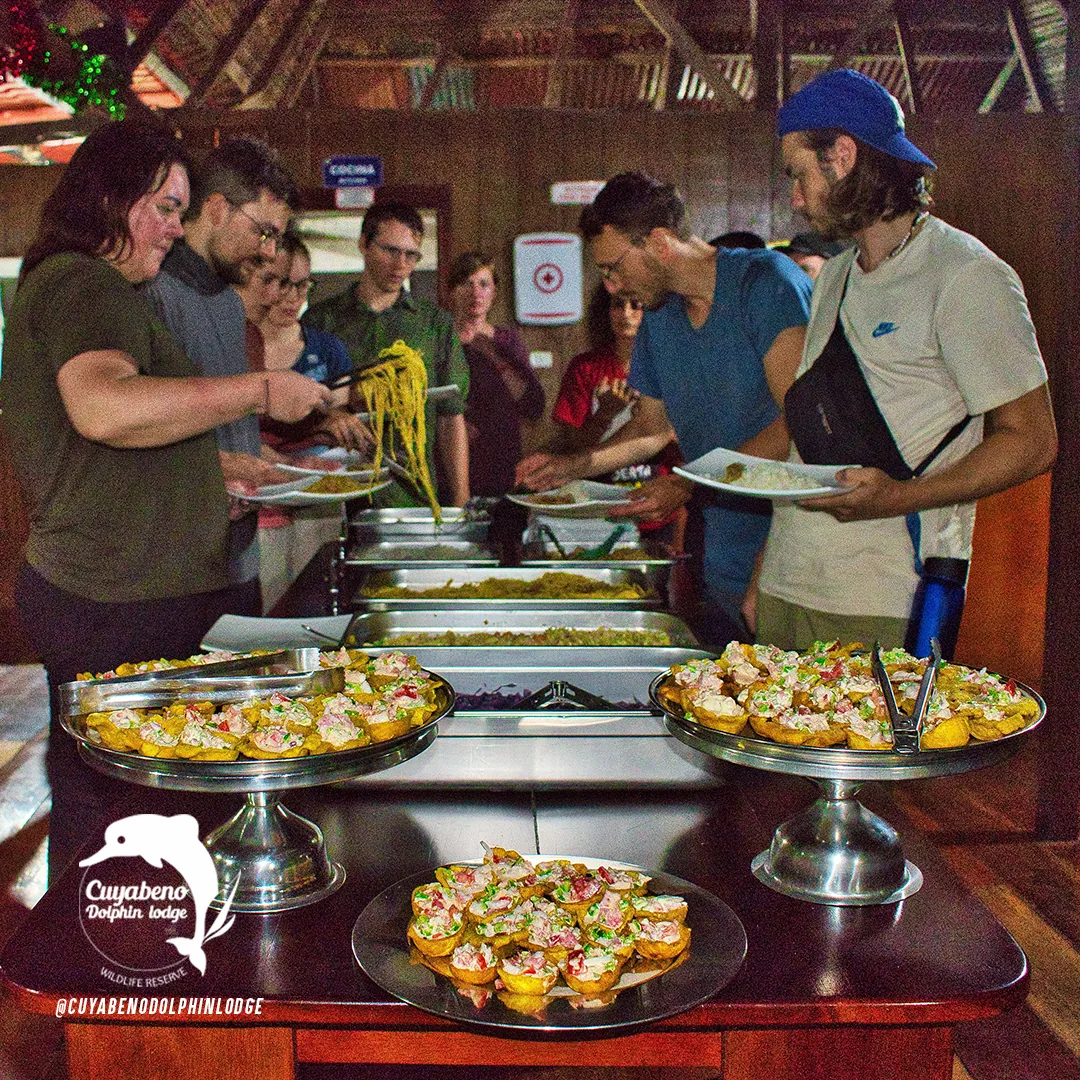
We run our whole Napo operation from a single lodge, and everything is built around it. Full board is included and served self-service or buffet style, prepared with local ingredients, with breakfast at 8:00 a.m. and unlimited water, coffee and tea dispensers in the dining areas. Also included in every programme:
- Bilingual guiding: English and Spanish, plus all motorised canoe transport for the activities.
- The kit you actually need: life jackets, rain ponchos and rubber boots in EU sizes 34 to 45. Bring your own if your size falls outside that range.
- Solar electricity in every room: plus towels and biodegradable shampoo and soap.
- Starlink satellite internet in the common areas: a safe at reception, and use of the kayaks subject to availability and weather.
What there is not: internet in the rooms, and air conditioning. That is part of what keeps the place quiet, and after a night walk built around the chorus of Amazonian frogs and insects you will not miss either.
Two, three or four days?
The difference between the programmes is not the lodge, it is how much of the region you get to:
- 2 days / 1 night, from $192 per person: easy, up to 15 travellers per guide. Interpretive hike, night walk, the clay lick, and the Pañayaku reserve, Caiman Island and Kichwa community morning.
- 3 days / 2 nights, from $243 per person: easy. Adds the full community afternoon and the chocolate workshop.
- 4 days / 3 nights, from $354 per person: moderate, and the most active of the three. A scheduled water activity on the Arajuno – tubing, kayaking or paddling, depending on conditions that day – a hike of around three hours on secondary forest trails, a sunrise lookout before dawn, and superior suite rooms with a bathtub. Even so, everything runs at a relaxed pace with a local guide.
Prices are per person, and all three depart any day of the week with a bilingual guide. The order of activities can change for weather, operational or safety reasons.
What Napo will not give you
Worth saying plainly, because the brochures rarely do: this area is above all about culture, landscape and connecting with the rainforest. Wildlife sightings do happen, especially birds at the clay lick and around the Pañayaku reserve and Caiman Island, but they can be limited depending on the season. If dense wildlife is your single priority and you have more days to spend, compare it with our Cuyabeno Reserve programmes, further northeast and deeper into the flooded forest.
For everyone else, Napo answers the question most travellers are actually asking: can I stand in the Amazon, eat with a Kichwa family, hear the forest at night and still make my flight? Yes, and in two days if that is all you have.
Visit Napo for yourself
We are the direct operator here. The lodge on the Arajuno River is ours and the guides are local, which is why we can tell you honestly what the season is likely to bring instead of promising jaguars. Read the full itinerary on the 3 day Arajuno River page, see everything we run in Tena and the Napo River or browse all our tours in Ecuador, or send us a WhatsApp at +593 98 094 2338 and we will tell you which programme fits the days you have.