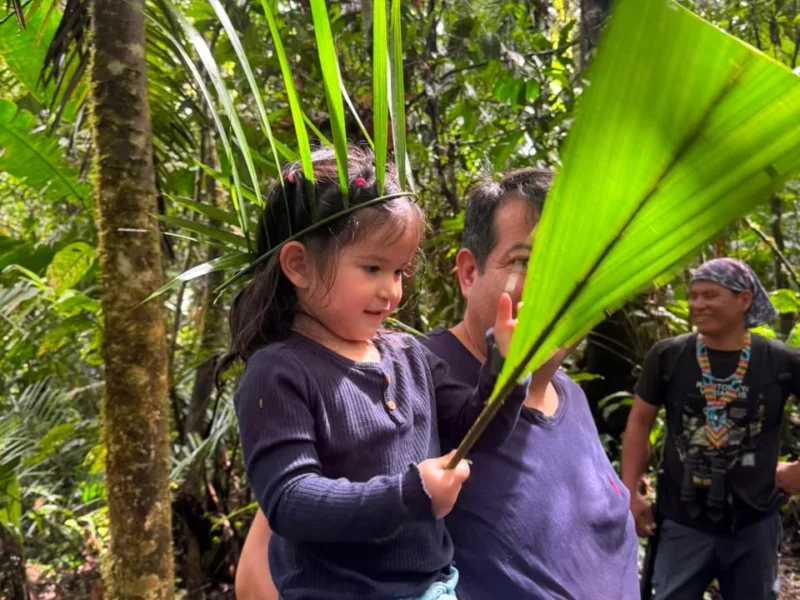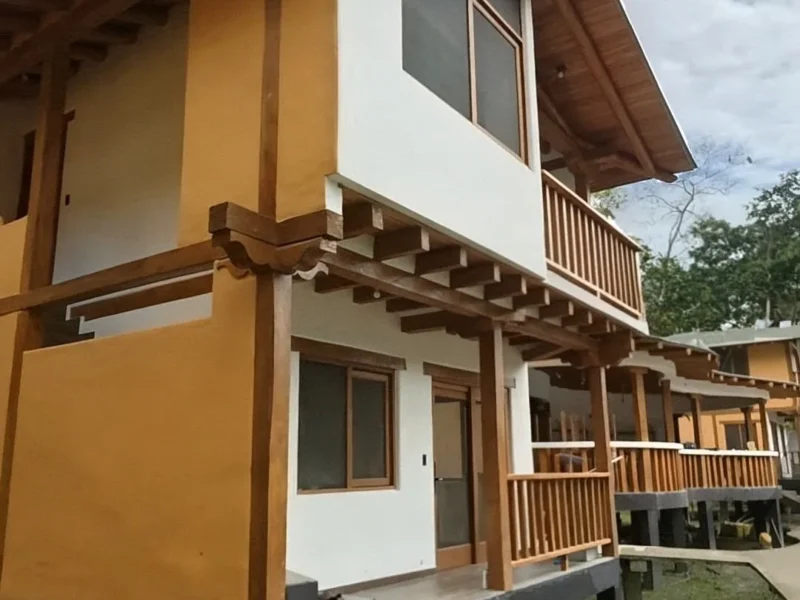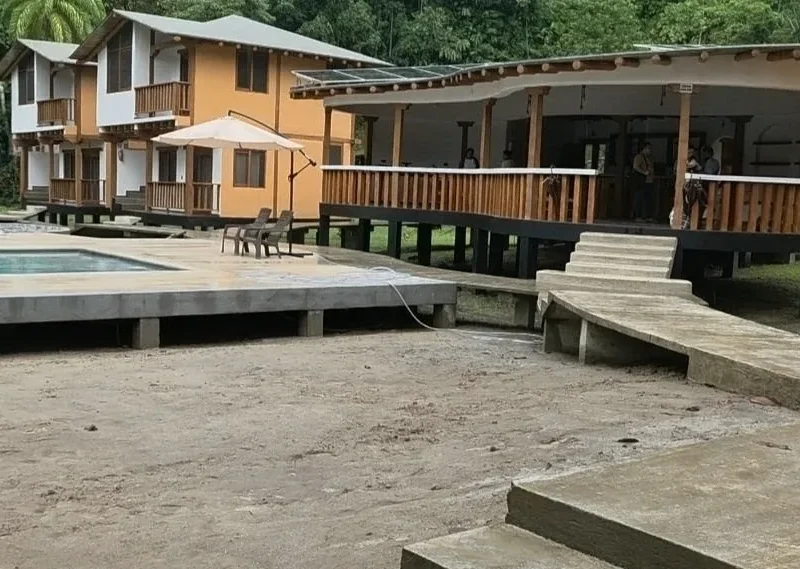
The Amazon does not ask for much gear, but it is unforgiving about the wrong gear. Jeans that never dry, a phone with nowhere waterproof to live, a torch left behind in Quito on the night of the frog walk. On the Arajuno River, near Tena, the lodge covers more than most travellers expect, so the real skill is knowing what not to carry.
This is the list we hand to travellers on our Tena Amazon Lodge programmes, with the reason behind each item, and it flags where the 2-day, 3-day and 4-day tours differ.
Start with what is already included
Three items that top every generic Amazon packing list are already in the price of our Arajuno River tours:
- Rubber boots: provided, in EU sizes 34 to 45. If your foot falls outside that range, bring your own pair: it is the one thing we cannot improvise.
- Rain ponchos: included for the excursions, so you do not need to buy a waterproof shell.
- Life jackets: included for the motorised canoe transfers and the water activities.
The rooms also come with towels and biodegradable shampoo and soap, and the dining areas have unlimited water, coffee and tea dispensers, which is why a reusable bottle earns its place and bottled water does not.
Clothes: two of everything, and no jeans
Humidity is the deciding factor, not cold. Things dry slowly, so bring enough that you always have a dry set and leave anything heavy at home:
- Long-sleeved shirts, two or more: better protection against sun and insects than repellent alone, and cooler than they sound.
- Comfortable trousers, two or more, and no jeans: denim soaks up the damp and stays wet for days.
- Shorts and T-shirts, two or more of each: for the lodge, the pool and the middle of the day.
- Socks, one pair per day: the item people always underpack. They go inside the rubber boots and will not dry overnight.
- Trainers and sandals: trainers for the trails when boots are not needed, sandals for the lodge and the canoe.
- A warm jacket and a sweater: yes, in the Amazon. Nights on the river and the pre-dawn birdwatching start are colder than the guidebooks suggest.
- A swimsuit: the pool on every programme, the river on the 2-day and 3-day tours, and tubing and kayaking on the 4-day.
- A hat or cap and sunglasses: the sun on open water is stronger than under the canopy.
Dry bags are the thing people regret leaving behind
Everything here moves by motorised canoe: the trip in from the Arajuno River Bridge is about twenty minutes on the water, and the excursions run the same way. Rain arrives without much warning and spray comes over the side. So: dry bags for gear, clothes and documents, plus a small waterproof backpack for the excursions.
This matters most on the 4-day programme near Tena, where the morning of day three is spent tubing, kayaking or paddling on the Arajuno: anything you want dry has to be sealed before you get in.
For the night walk and the dawn at the clay lick
Two moments need their own kit, and both happen in the dark or close to it:
- A torch with spare batteries: the night walk on the first evening is built around sound, the frogs and insects taking over the forest, and you will be off the lit paths.
- Binoculars, optional: worth carrying for the early start at the saladero, the natural clay lick where parrots and parakeets gather at first light.
- A camera: and a plan for keeping it dry.
- Mosquito repellent and sunscreen: both, and more of each than you think.
Every room has electricity from solar panels, so charging is not a problem. Starlink satellite internet reaches the common areas but not the rooms, and there is no air conditioning.
Toiletries, medication and the biodegradable rule
Bring biodegradable or natural soap and shampoo. You are washing beside a living river, and the lodge already supplies biodegradable products in the rooms, so this only covers the extras you pack yourself. Bring your personal medication too, in the quantity you need and in its own dry bag: the lodge sits twenty minutes upriver from the Arajuno River Bridge, so pack for the whole stay.
Cash, documents and the extras that are not in the price
Carry your passport or ID card; a copy or a photo is enough. Carry small notes too, because a few things are paid on the ground:
- USD 10 per person: entrance to the Kichwa community and the Pañayaku reserve, subject to change, not included in the tour price.
- Handicrafts: on the 3-day and 4-day tours, the afternoon at San Bartolo Sharayaku ends with time to buy pieces made by the families you just met.
- Alcoholic drinks, extra meals, personal expenses and tips: none of these are in the price, and optional activities such as rafting or the ayahuasca ceremony are charged separately.
There is a safe at reception for anything you would rather not take on the river. The journey from Quito to the Arajuno River Bridge is not included, though we can arrange a door-to-door transfer at extra cost; the meeting point is the bridge at 12:00, any day of the week.
How the list changes with the length of your trip
- 2 days, 1 night: the lightest version. One change of clothes, a torch, a dry bag and you are set. Rated easy, from $192 per person, up to 15 travellers per guide.
- 3 days, 2 nights: adds a full afternoon with the Kichwa community and the chocolate workshop. Bring cash, and something you do not mind smelling of woodsmoke after the tulpa fire. Easy, from $243 per person.
- 4 days, 3 nights: the most active, rated moderate. A water morning plus a three-hour hike on forest trails, so add an extra set of quick-drying clothes and more socks. From $354 per person.
Ready for the Arajuno?
We are a local Ecuadorian operator: Tena Amazon Lodge is our own lodge and our own guides run these programmes, which is why we can tell you exactly what is in the price. Every tour page carries the full packing list: start with the 3-day Arajuno River tour, see the other Tena and Napo River programmes or browse all our tours. For a straight answer about your dates, WhatsApp us at +593 98 094 2338.