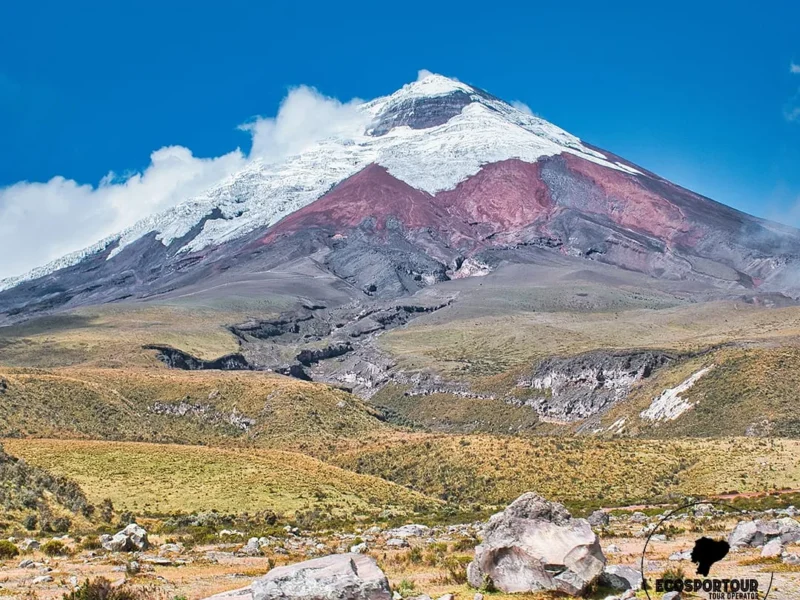
Above 3,500 m the forest gives up and something stranger takes over: a spongy, wind-blasted grassland called paramo that exists almost nowhere on Earth outside the northern Andes. Cotopaxi National Park is one of the easiest places in Ecuador to walk straight into it — and into the flora and fauna that survive up here. You enter at 3,200 m, and a couple of hours later you can be standing at 4,600 m among plants that would not survive one night at sea level.
Apart from the Galapagos, no protected area in Ecuador receives more visitors, and most of them come for the cone. This is a guide to the rest: the Cotopaxi flora and fauna you can actually name from the van window, the birds you have a real chance of seeing, and the mammals everybody hopes for and almost nobody spots.
Why nothing here looks like a normal mountain
Cotopaxi sits on the equator, so there is no summer or winter at altitude – only day and night, and night is close to freezing all year. Add fierce ultraviolet light, thin air, constant wind and young volcanic soil, and you get a filter almost nothing passes. The average temperature on our Cotopaxi day tours is around 5C / 41F. What survives does it with tiny leaves, waxy or woolly surfaces, growth pressed flat to the ground, and roots in a soil that works like a sponge – the one that stores the water Quito later drinks.
Cotopaxi flora: the five plants worth knowing by name
No botany needed. Five plants cover most of what you see between the entrance and the refuge:
- Chuquiragua. A low shrub with hard, spiny leaves and bright orange flowers, often called the flower of the Andean trekker. Learn this one first: it is the fuel station for the local hummingbirds.
- Pajonal. The straw-coloured bunchgrass that turns the paramo blond from a distance. Up close it grows in tussocks, with the small flowers hiding in the bare ground between them.
- Cushion plants. Locally almohadillas. They look like lumps of green concrete, and each is a dense colony of tiny plants growing flat to escape the wind.
- Achupalla. A spiky ground bromeliad, cousin of the pineapple, with a rosette that collects rainwater. Spectacled bears eat the heart of it, which is one reason bears come up this high.
- Polylepis. The paper tree, with shaggy red bark that peels off in sheets. It forms the highest woodland on the planet, in sheltered gullies where normal forest cannot hold on.
The straight blocks of pine on the lower slopes were planted decades ago and are not native – the tidiest-looking parts of this landscape are the least wild.
Birds you have a real chance of seeing
Birds are the honest wildlife of Cotopaxi: few species, but open treeless ground, so what is there you see.
- Carunculated caracara. Black and white with an orange face, walking the grass as if it owns it. The bird you are most likely to photograph.
- Andean lapwing. Grey and white waders that patrol the flats by the water and shout at anything that comes close, including you.
- Silvery grebe and Andean teal. Small waterbirds out on the lagoon surface. Worth a proper look rather than a glance.
- Ecuadorian hillstar. A hummingbird that lives at these altitudes all year and feeds on chuquiragua. Find the orange flowers, then wait.
- Andean condor. The one everybody asks about. Rare, and guaranteed nowhere – scan the ridgelines rather than the sky overhead, and treat a sighting as luck, not an itinerary item.
Mammals: what you will realistically get
White-tailed deer are the classic Cotopaxi sighting, usually in ones and twos on the grassland, early or late in the day. The Andean fox, the culpeo, is the other regular: sandy red, dog-sized, unbothered by vehicles. Rabbits and free-roaming horses turn up on the open plain. Pumas and spectacled bears use these highlands too, but nobody plans a day around them: anyone promising you a bear on a day trip is selling a story, not a tour.
Limpiopungo, where it all concentrates
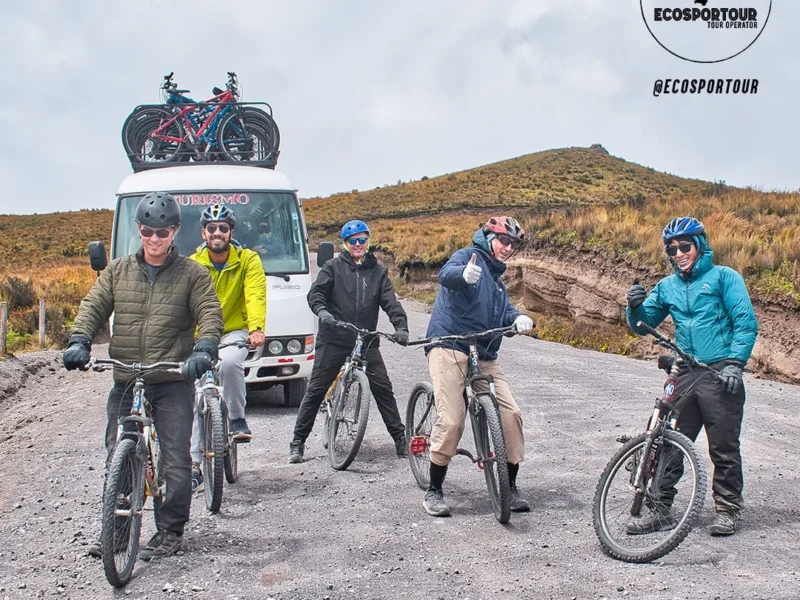
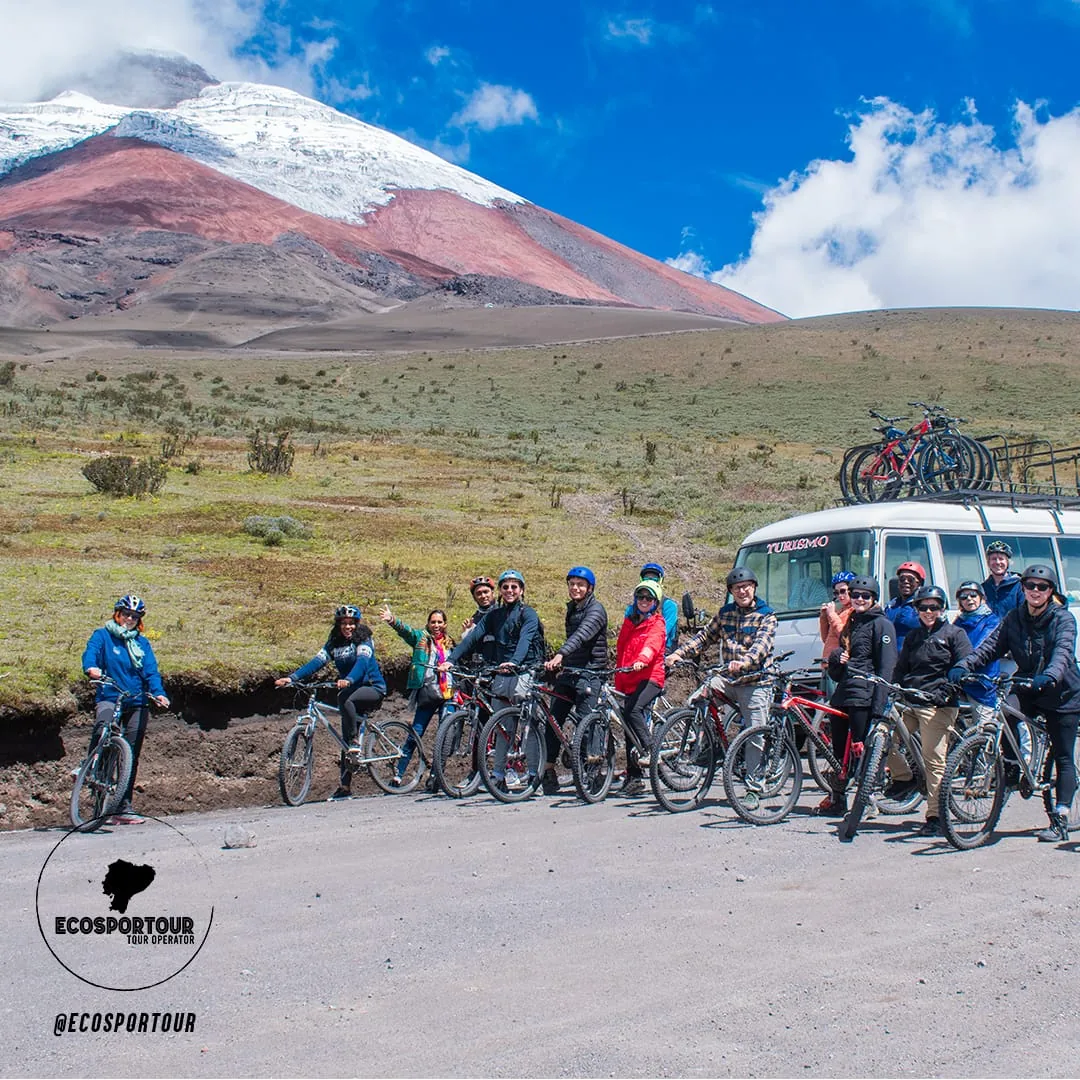
The lagoon at 3,850 m is the best single stop for Cotopaxi flora and fauna in the lower park: water, marsh and open grass in one place, with the cone behind it. It is also where two of our tours spend their time. The bike descent on the Cotopaxi Hike and Bike runs around 45 minutes downhill from the parking lot and finishes there, and the three hours in the saddle on Cotopaxi Horseback Riding stay around the Limpiopungo valley at the same altitude. Go quiet at both: a group that stops talking sees more than one that keeps walking.
Which tour puts you closest to the wildlife
- Cotopaxi Hike and Bike – $61, 10 hours. Acclimatization stop at 2,945 m, transport up to the parking lot at 4,600 m, the hike to the Jose Rivas refuge at 4,800 m, then the bike descent to Limpiopungo. Wednesday, Friday, Saturday and Sunday. Best for: crossing the whole altitude range in a day.
- Cotopaxi Horseback Riding – $112, full day. At the 3,200 m entrance your guide explains the lower park and its endemic flora and fauna, with a photo stop at 3,600 m weather permitting, then three hours riding the lower plain with a native chagra guide. Best for: slow time at ground level, where the animals are.
- Cotopaxi + Quilotoa, 2 days 1 night – $152. The volcano and the flora and fauna of the area are explained on the drive south on day one; day two moves to the Quilotoa crater. Tuesday, Wednesday, Thursday and Saturday.
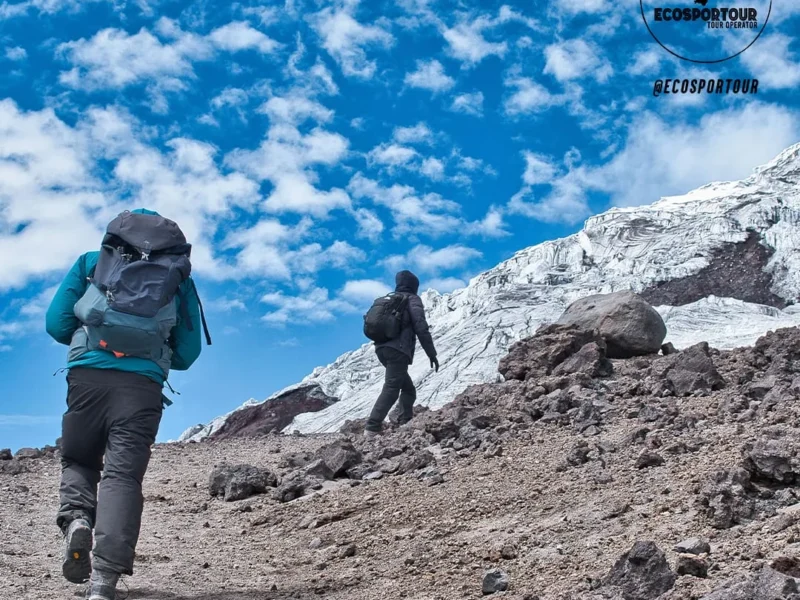
- Cotopaxi Summit Climb – $405, 2 days. Above the living world entirely: you leave the refuge at 4,800 m at 00:30 a.m. and walk on ice to 5,897 m. Best for: climbers, not naturalists.
Whichever you pick, bring warm layers, a windbreaker, gloves and neck and ear protection: cold hands end wildlife watching faster than bad luck does. And stay on the trails – cushion plants take decades to recover from one boot print.
Come and read the paramo with a guide
We run these departures ourselves, with our own guides and our own transport, which is why our Cotopaxi day tours include a bilingual Spanish-English guide, authorised tourist transport, a menu-type lunch and the protected area entrance permits. Pick your pace on the Cotopaxi Hike and Bike page or the slower Cotopaxi Horseback Riding, browse the rest of our tours from Quito, or send us a WhatsApp at +593 98 094 2338 and we will tell you straight which day gives you the best chance of the animals you came for.