Tena is where the Andes let go and the Amazon takes over: the capital of Napo province, the gateway most travellers use to reach the Ecuadorian rainforest. And a heartland of Kichwa families long before there was a town. Most people come for the forest. What stays with them is an afternoon in somebody’s kitchen, hands covered in yuca, learning how a household on the Arajuno River actually eats. That afternoon is where Kichwa culture near Tena stops being a line on an itinerary.
Most Amazon programmes promise a community visit and leave it at that. Ours has a name, a place and a printed schedule: San Bartolo Sharayaku, a Kichwa community of Arajuno, reached by canoe from our own lodge upriver. This guide covers what Kichwa culture near Tena really looks like from inside a community visit, what the Kichwa words on the itinerary mean. And which of our Arajuno River programmes builds a proper afternoon around it instead of a photo stop.
Who you are actually visiting
The Kichwa are the most numerous Indigenous people of the Ecuadorian Amazon. The families along the Napo and its tributaries often go by the name Napo Runa. And their language belongs to the same family as the one spoken in the Andean highlands. So a traveller who has already been to Otavalo will recognise words in Arajuno.
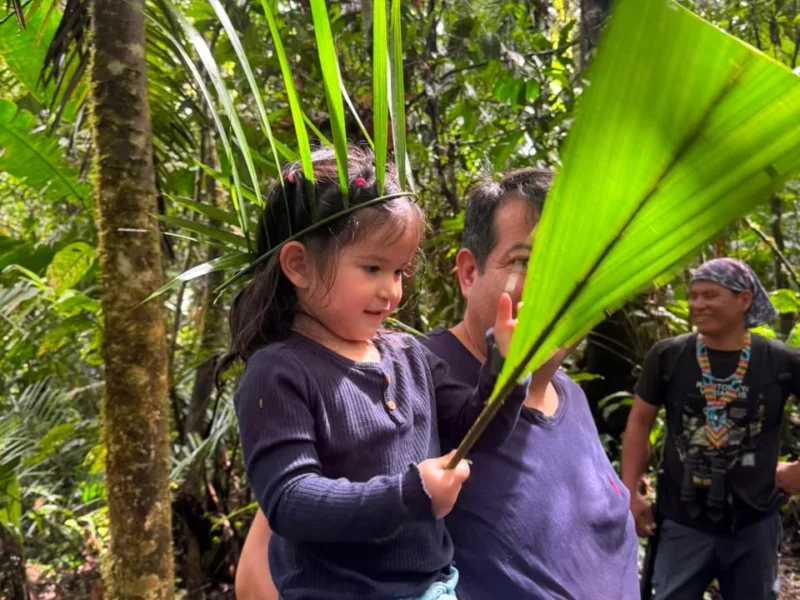
Daily life turns around the chacra: the family plot cleared in the forest and planted with yuca, plantain and cacao. Alongside it come fishing in the river and a working knowledge of the forest as pharmacy, larder and hardware store. The rainforest here is not scenery, it is the household economy. That is the ground Kichwa culture near Tena stands on. And it is the backdrop to everything you see in the afternoon: the chicha, the fire, the food, the dances.
Where you meet Kichwa culture near Tena
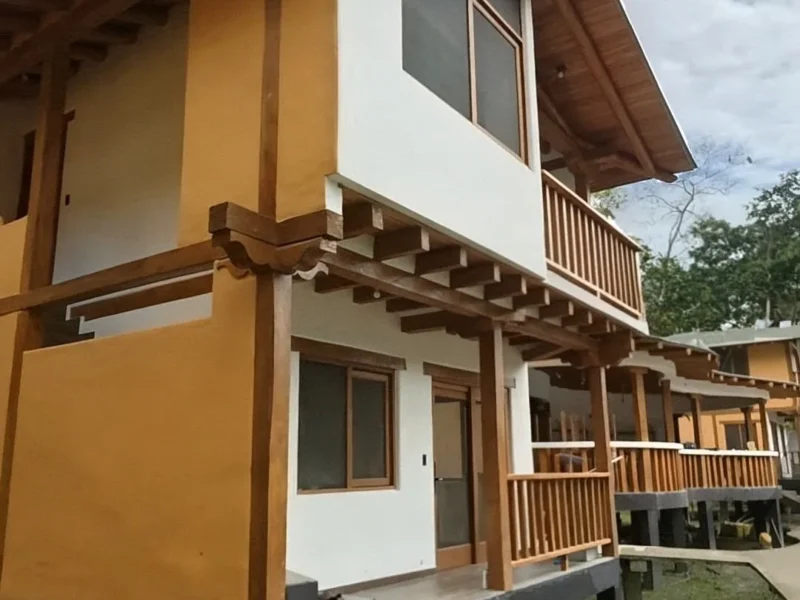
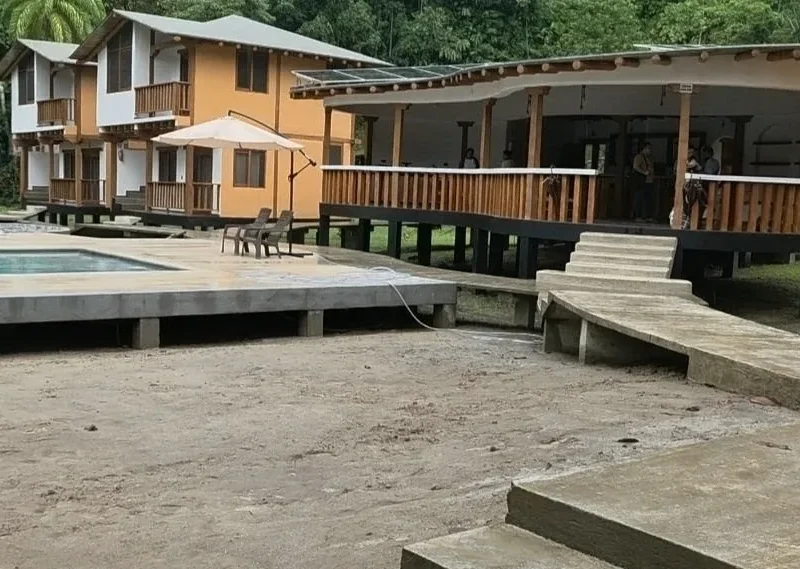
Our Amazon programmes on this side of the region run from Tena Amazon Lodge, our own lodge on the Arajuno River, east of Tena. You meet us at the Arajuno River Bridge at 12:00 and a motorised canoe takes about twenty minutes upriver. The road journey from Quito to the bridge is not included in the price, although we can arrange a door-to-door transfer at extra cost.
Our guides work in English and Spanish, and the community leader introduces the families before anything else happens. That order matters: you know whose home you are in before you are handed a bowl of anything.
An afternoon in San Bartolo Sharayaku
On the 3-day and 4-day Arajuno River programmes the whole afternoon of day two belongs to the community, after lunch back at the lodge. It is the longest look at Kichwa culture near Tena that any of our programmes gives you. And it is not a fifteen-minute stop:
- The welcome: the community leader receives the group and introduces the families.
- Chicha: you take part in the brewing, from the yuca up, followed by an optional toast with guayusa tea and fermented chicha.
- The dances: Amazonian dances performed by the community in traditional dress.
- The tulpa workshop: cooking maito, yuca and the staple foods of the household over the tulpa, the hearth a Kichwa kitchen is built around.
- The pambamesa: everyone sits down together and eats what has just come off the fire.
- Handicrafts: time at the end to buy pieces made by the families you have spent the afternoon with.
Entrance to the community and to the Pañayaku reserve is not included: USD 10 per person, subject to change, paid separately from the tour price.
Chicha, maito, tulpa: the words you will hear
The itinerary uses Kichwa words because there is no tidy English equivalent for any of them. A handful will carry you through the afternoon.
- Chicha: the everyday drink of the upper Amazon, brewed from yuca that is cooked, mashed and left to ferment. Mild when young, properly sour as the days pass. Offering it is how a Kichwa house says welcome, and the toast is optional; nobody minds if you pass.
- Guayusa: a tea brewed from the leaves of an Amazonian holly, traditionally drunk in the small hours before the day’s work starts, while the family talks through dreams and plans the day. Caffeinated, faintly bitter, tied to household rhythm rather than to tourism.
- Tulpa: the hearth of three stones at the centre of the house, where the fire is kept alive and the cooking happens.
- Maito: fish, palm heart or meat wrapped in broad leaves and cooked over the embers, so it steams in its own juices and arrives with the leaf still on.
- Pambamesa: literally a table on the ground. Food goes out on leaves in a long line and everybody eats from it at once, rather than plated per person.
Cacao, from the pod to the cup
Napo is cacao country, and the chocolate workshop is the other half of the cultural programme. Cacao grows in the same chacra as the yuca. So it belongs to Kichwa culture near Tena as much as the tulpa does. On the 3-day and 4-day itineraries you dry, roast, grind and taste the cacao yourself, using techniques local families still use. The day it falls on can move around the itinerary, but it always takes place.
The forest as pantry and pharmacy
Culture here does not stop at the edge of the village. On the 4-day Arajuno River programme, the afternoon of day three is a hike of around three hours on secondary forest trails with a local guide. And the subject is not scenery but medicinal plants, forest species, the ancestral uses of Amazonian flora and how they still fit into daily life in the surrounding communities.
Every length also includes the dawn visit to the saladero, a natural clay lick where birds gather to eat mineral-rich clay. Few of them remain in the Ecuadorian Amazon. That said, it is worth saying plainly that this part of the Amazon is above all about culture, landscape and connecting with the rainforest. Parrots and parakeets come in at first light, but sightings can be limited depending on the season. If a wildlife checklist is your priority, tell us before you book.
How to be a good guest
Kichwa culture near Tena is not staged for visitors. So the etiquette is simply the etiquette of being in somebody’s house.
- Let the optional stay optional: accept or decline the guayusa and chicha toast calmly. A polite no costs nothing, and pretending to be delighted before abandoning a full bowl is worse.
- Ask before you photograph: a group performance is one thing, a kitchen or a small child is another.
- Buy the handicrafts: it is the most direct thing you can do all afternoon. They come at the very end, so leave room in your bag.
- Keep the ceremony conversation separate: extras such as rafting or an ayahuasca ceremony are not part of the community afternoon. We arrange and charge them separately, so raise it with us before you travel rather than on the day.
What to pack, and what we lend you
- What we lend: life jackets, rain ponchos and rubber boots in EU sizes 34 to 45. Bring your own boots if your feet fall outside that range.
- What to wear: long-sleeved shirts and comfortable trousers rather than jeans, plus a hat, repellent, sunscreen and a small waterproof backpack. A torch matters for the night walk.
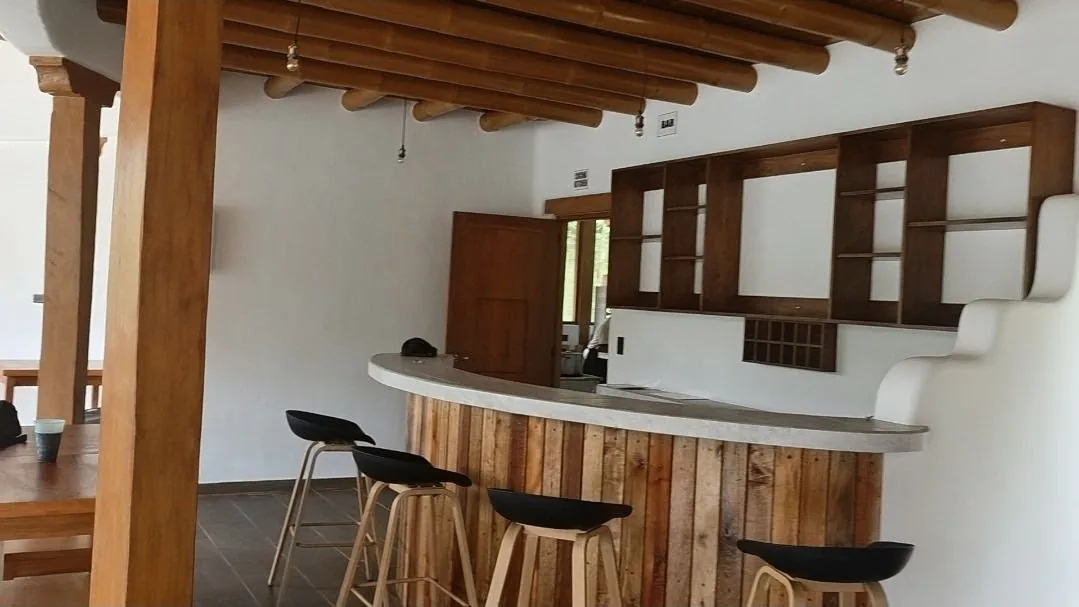
- Meals: full board at the lodge, served self-service and cooked with local ingredients. Breakfast is at 8:00 a.m.
Which programme gives you the community day?
Our Superior programmes at Tena Amazon Lodge come in three lengths. All of them leave the Arajuno River Bridge at 12:00, run any day of the week. And include full board, a bilingual guide and every canoe transfer. Each length also exists in more than one published version, private and shuttle-inclusive among them. So our tours page shows several cards per length and the prices below are the lowest of each. Where they really differ is how much culture you get.
- Discover the Amazon: 2 Days at Tena Amazon Lodge, from $192 per person. Rated easy, with a night walk and dawn at the clay lick. The Pañayaku reserve, Caiman Island and the Sharayaku community share the day two excursion and are visited depending on the weather and conditions of the day, so the community afternoon is not guaranteed.
- Explore the Amazon: 3 Days on the Arajuno River, from $243 per person. Still easy, and the one built around culture: the full San Bartolo Sharayaku afternoon on day two, plus the chocolate workshop.
- Adventure in the Amazon: 4 Days near Tena, from $354 per person. Rated moderate. Everything above plus tubing or kayaking on the Arajuno, the three-hour forest hike, a pre-dawn walk to a lookout on the last morning, and superior suite rooms with a bathtub.
In practice the rule is simple. If Kichwa culture near Tena is the reason you are travelling, book three days or more.
Sit down at the pambamesa
Tena Amazon Lodge is our own lodge, our guides come from the region and we run these programmes with our own canoes. So the community afternoon is written into the itinerary rather than sold as an add-on on arrival. And we can tell you exactly what it contains before you pay for it. Check dates and book the 3-day Arajuno River programme, see the whole region on the Tena and Napo River page, browse the rest of our tours in Ecuador, or send us a WhatsApp at +593 98 094 2338 and we will tell you which length fits the time you have.