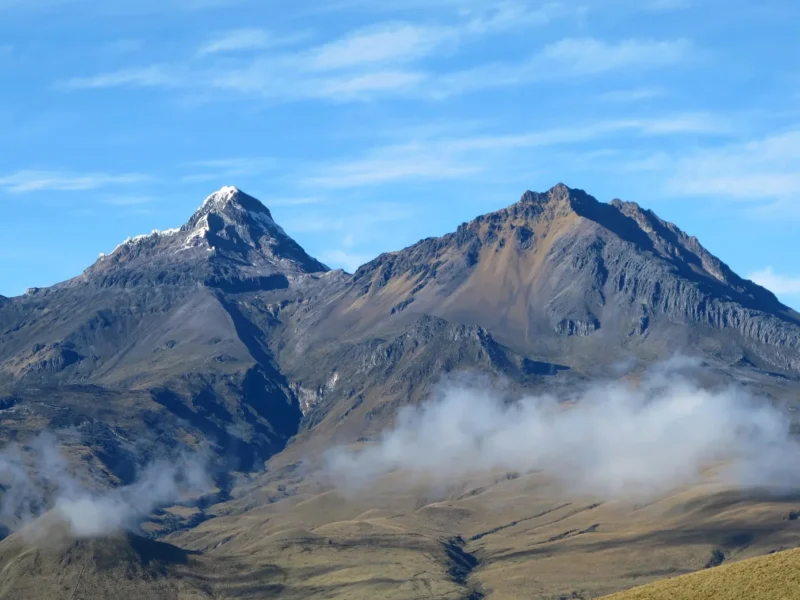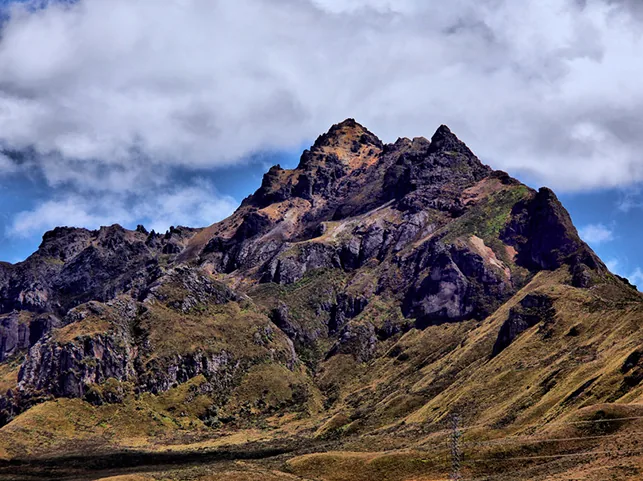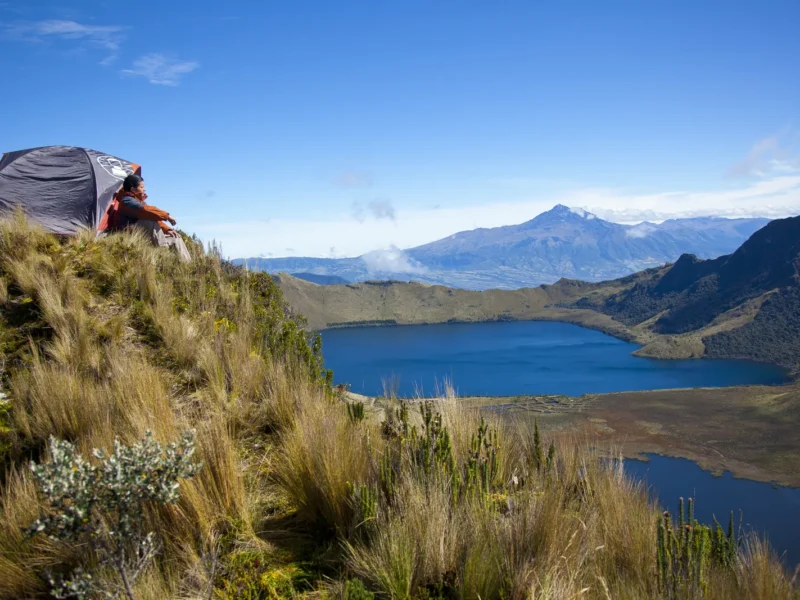
Ecuador asks you to pack for two different planets in the same suitcase. On Wednesday you can be at 4,800 m on Cotopaxi with the wind cutting through your jacket; by the weekend, sweating through a long-sleeved shirt in a canoe on the Arajuno River. Same trip, two completely different kit lists.
This is what our guides actually ask people to bring for each side of the Andes, taken from the tours we operate, plus the gear you can leave at home because it is already included.
Why one packing list will not work
In the Sierra the air is thin and dry, the sun burns even when it is cold, and the day swings from sunshine to freezing wind in minutes. Average temperature on our Cotopaxi Hike and Bike day is around 5C / 41F, and the wind at the refuge is what people underestimate. The Amazon does the opposite: warm, wet and generous with insects. What ruins a jungle trip is never the cold, it is wet clothes with no way to dry them.
What to pack for the Sierra
The list we send for our day trips out of Quito, from Cotopaxi to the Quilotoa crater:
- Warm layers and a windbreaker. Comfortable, warm clothes you can add and remove, under something windproof.
- Gloves, neck and ear protection. The three things everyone forgets and everyone misses at 4,600 m.
- Sunglasses, sun hat and sunscreen. Our Quilotoa Culture and Hike list asks for all three, and the crater rim glare earns them.
- Comfortable shoes for mountainous and sandy terrain. That is the wording on the list, and the whole requirement. Hiking boots, a waterproof jacket and poles only appear once you add an acclimatization hike such as Rucu Pichincha.
- A camera. On the Cotopaxi, Quilotoa, Otavalo and Rucu Pichincha lists alike.
What to pack for the Amazon
Longer list, and it barely changes between our Cuyabeno lodge and our lodge on the Napo side near Tena:
- Long-sleeved shirts and trousers, two or more of each. No jeans: denim soaks up water and then stays wet for days.
- Shorts, T-shirts and socks. Two or more of the first two, and one pair of socks per day.
- Trainers and/or sandals. Rubber boots are the one thing you do not need to bring.
- A warm jacket and a sweater. Yes, in the jungle: early canoe rides and night walks are cooler than people expect.
- A swimsuit, plus biodegradable soap and shampoo. You are washing inside a protected reserve.
- Mosquito repellent, sunscreen and a hat or cap. All three are on the list of every Amazon programme we run.
- A torch with spare batteries. The night walk is one of the best hours of the trip, and one set is not enough.
- Dry bags. For gear, clothes and documents. The most useful thing in your luggage.
- A waterproof backpack, a water bottle and a towel. Plus a first-aid kit with your own medication, and binoculars if you have them.
What is already included, so leave it at home
Half the heavy gear is ours:
- In the rainforest: rubber boots in EU sizes 34 to 45, rain ponchos and life jackets at both our Cuyabeno lodge and the Tena Amazon Lodge. Outside that shoe range, bring your own boots.
- In the rooms: mosquito nets in Cuyabeno; towels, shampoo and biodegradable soap at the Napo lodge.
- On Cotopaxi: bike, helmet, protected area permits and lunch, all in the Hike and Bike day.
- On a summit climb: plastic boots, crampons, harness, helmet, ice axe, gaiters, windproof jacket and trousers and rope are ours. You bring base layers, fleece, inner gloves, a sleeping bag and spare AAA batteries for the head torch.
Documents and the cash you will actually need
Carry small bills; Ecuador uses the US dollar. Several fees are paid on the spot, outside the tour price:
- Quilotoa: $2 for the lagoon and $1 for the Toachi Canyon, per person. A kayak is $3, a horse out of the crater $10.
- Otavalo: $5 for the Quitsato ticket on our Otavalo Cultural and Shopping day.
- Cuyabeno: $10 per person for the community visit and $10 for the shaman visit.
- Napo: $10 per person for the community and the Pañayaku reserve, subject to change.
For Cuyabeno bring your original passport or ID card. For the Napo lodge a copy or a photo on your phone is enough. Whichever you carry, keep it in a dry bag.
Doing both in one trip
Most people take the Sierra first and the jungle second, and the trick is to think in two bags: gloves, fleece and hiking boots do nothing for you on the river. The Cotopaxi Hike and Bike, Quilotoa and Otavalo day tours all pick up at Foch Square at 7:10 a.m. or at Zular Coffee Shop on San Blas Square at 7:20 a.m., so the night before is not the moment to repack your whole life. Cuyabeno meets at the Cuyabeno River Bridge at 11:00 a.m., an overnight bus from Quito or a flight the day before, while the Napo lodge meets at the Arajuno River Bridge at 12:00.
Ready to pack for both?
We operate these trips ourselves, with our own guides and our own lodges in Cuyabeno and near Tena, which is why these lists are the real ones, not a generic template. Start with the Cotopaxi Hike and Bike, give yourself four days in the Cuyabeno Wildlife Reserve, browse our tours page, or send us a WhatsApp at +593 98 094 2338 with your dates and we will tell you exactly what to bring.