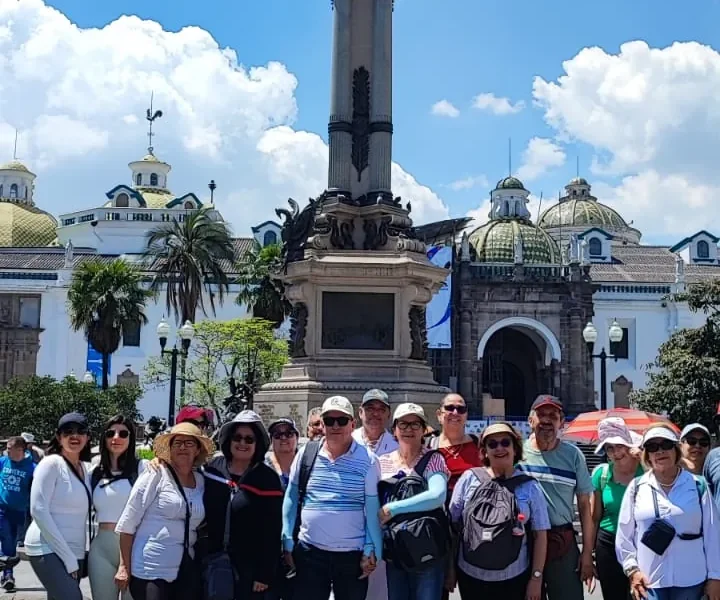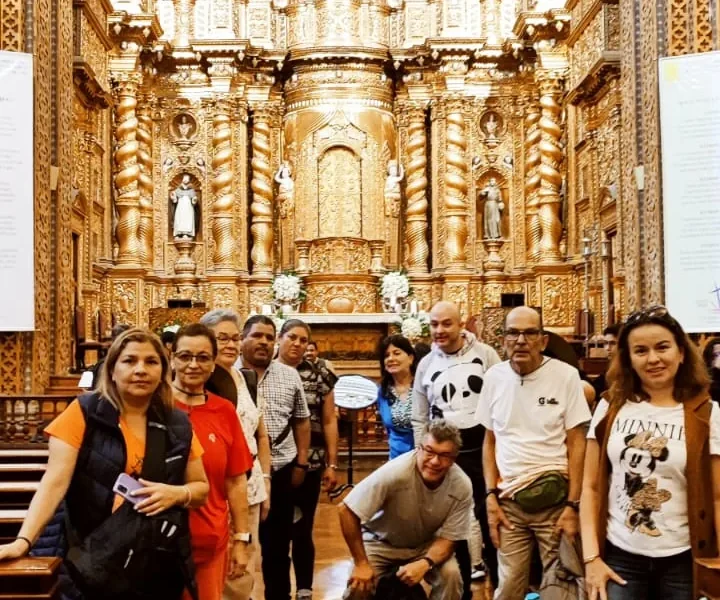
Quito’s Old Town is one of the largest and least altered colonial centers in the Americas, and in 1978 it was among the first places in the world added to the UNESCO World Heritage list. What that title does not tell you is that Quito Old Town legends live on almost every block down here, still told out loud by the people who live and work in them.
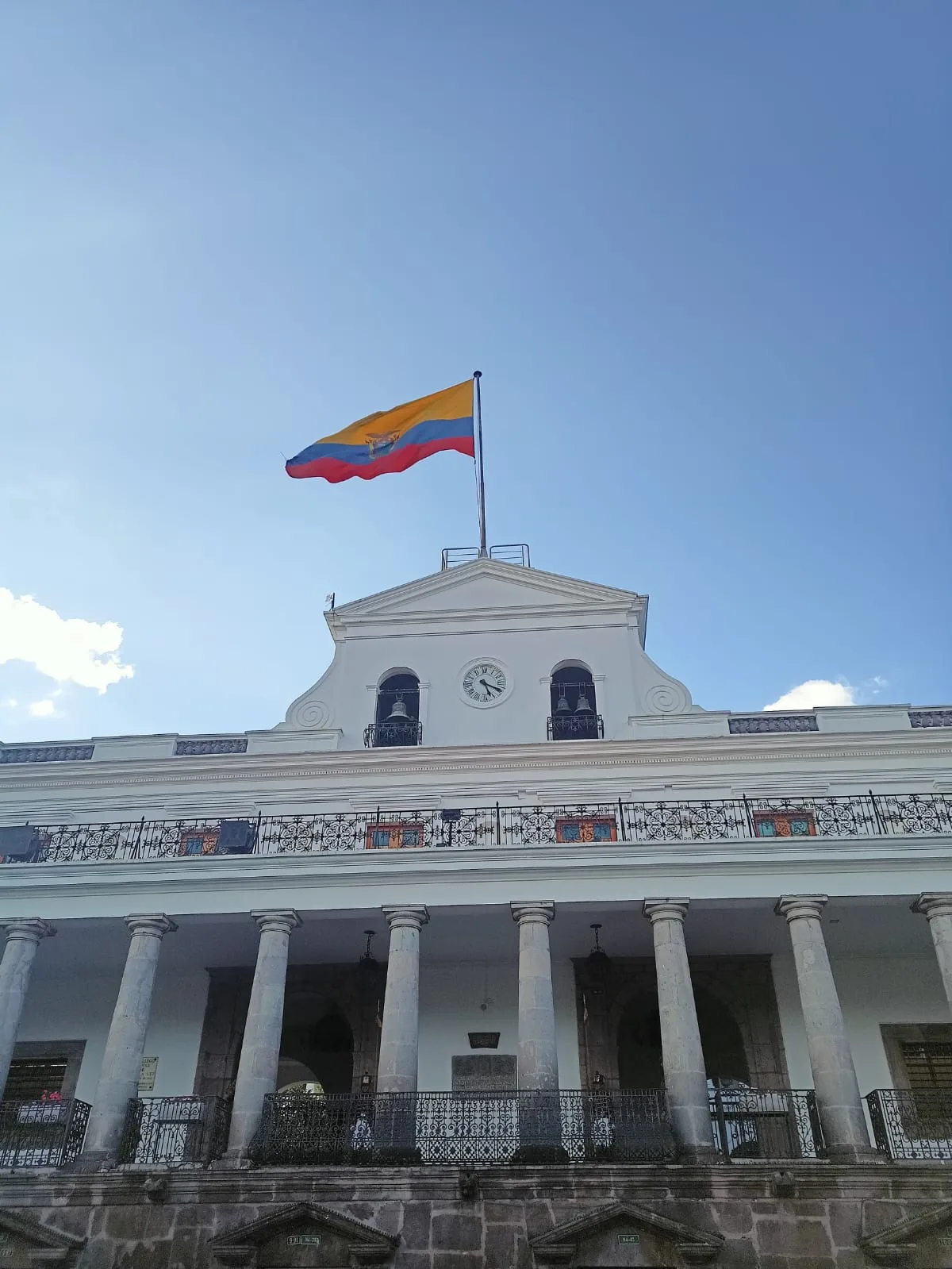
This guide covers both the history and the Quito Old Town legends: what happened in these streets, and what people here say happened. The founding, the churches, the square where independence began, and the legends you will hear if you walk the historic center with a local guide.
A Spanish city built on the ashes of an Inca one
Before 1534 Quito was one of the great northern cities of the Inca empire, and it did not fall in a battle. As the Spanish forces closed in, the general Ruminahui burned it rather than hand it over, and its lost treasure has drawn expeditions ever since. The Spanish town was founded over the ruins in December 1534.
That is why the Old Town looks the way it does: a grid of narrow streets climbing the slopes under the Pichincha volcano, churches and mansions built from volcanic stone quarried on those same slopes, and almost nothing of the Inca city left above ground. The first thing to understand about the historic center is an absence.
Why the churches are the history books
Four buildings carry most of the story, and you can read the outside of every one of them for free:
- San Francisco. Begun within a few years of the founding and still the largest colonial religious complex in the Americas. Its wide stone atrium is where the city’s most famous legend takes place.
- La Compania de Jesus. More than 150 years in the making and the reason people talk about the Quito School: a baroque interior worked in gold leaf by indigenous and mestizo craftsmen who folded their own symbols into a European design.
- The Cathedral. On the main square, and home to a bronze rooster with its own legend.
- The Basilica del Voto Nacional. The neo-Gothic one, far younger than the rest, with gargoyles carved as Ecuadorian animals – iguanas, tortoises, armadillos, condors – instead of European monsters. This is where our walking tour meets.
The Quito Old Town legends people still tell
These are the stories Quito families tell their children, and every guide tells them slightly differently:
- Cantuna and the devil. The indigenous builder contracted to finish the atrium of San Francisco ran out of time and made a pact: the work completed by dawn in exchange for his soul. The devil’s crew almost managed it. Cantuna pulled one stone out before sunrise, so the job was unfinished and the contract void. People still look for the missing stone.
- Padre Almeida. A friar who slipped out of his monastery at night by climbing down a statue of Christ, until the statue asked how long he intended to keep it up. He carried on, until the night he met a funeral procession and recognized the body in the coffin as his own.
- The rooster of the cathedral. Don Ramon, a man with a serious drinking habit, spent his nights insulting the bronze rooster on the cathedral roof. One night the rooster came down to settle it. He stopped drinking.
- La Caja Ronca. A procession of souls with a hoarse drum that crossed the Old Town at midnight, and a warning that anyone curious enough to open the shutters and watch would regret it.
The square where independence began
Plaza Grande, officially Plaza de la Independencia, is still the working center of the country: the presidential palace on one side, the cathedral on another, the archbishop’s palace and city hall on the other two. On 10 August 1809 a group of criollos deposed the Spanish authorities here and formed their own governing junta, an act remembered as the first cry of independence in South America and still Ecuador’s national day.
It ended badly. Most of those men were imprisoned and killed in August 1810, and the city was not free until the battle of Pichincha in May 1822, fought on the slopes you can see from the square.
What a guided walk of the Old Town in Quito covers
Our Half Day Walking Tour Quito is three hours on foot, rated easy, shared, and $13 per person with a bilingual English-Spanish guide. It leaves the Basilica del Voto Nacional every day of the week, at 10:00 a.m. or at 2:00 p.m. The route:
- The church facades. The main colonial churches of the historic center, explained from the street.
- Places where things happened. The squares and buildings that shaped the city, with the story behind each.
- The legends. The Quito Old Town legends above, told where they belong.
- Traditional sweets. A tasting of the sweets still made in the historic center.
- Ecuadorian chocolate. The walk finishes with a chocolate tasting at Yumbos Coffee Shop.
Not included: food and drinks beyond those two tastings, entrance fees to museums and churches, and tips.
Practical notes before you go
- Altitude. Quito sits at 2,850 m (9,350 ft). The Old Town is cobbled and steep in places, so walk slower than you think you need to on your first day.
- Which departure. The 2:00 p.m. one is what works on an arrival day, when you have landed in the morning.
- Shoes and sun. Cobblestones and slopes ask for grip, the sun at this altitude is fierce even when the air is cold, and a light rain layer makes sense in any month.
- Cash. Small notes for entrances and street purchases. Ecuador uses the US dollar.
For the whole city from above, our Rucu Pichincha Acclimatization Hike meets at our agency at Venezuela N11-99 y Carchi at 08:30 a.m., rides the cable car to 3,945 m and climbs Quito’s own summit at 4,698 m. Minimum two participants, cable car ticket not included, current rate on request.
Walk the Old Town of Quito with a guide who lives in it
We run this walk ourselves, from our own office in the historic center on the corner by the Basilica, which is why it starts on our doorstep twice a day, every day, at $13 per person. Check the times and book on the Half Day Walking Tour Quito page, browse the rest of our tours from Quito, or send us a WhatsApp at +593 98 094 2338 and we will tell you which departure fits your first day at altitude.