Ecuador packs four separate natural worlds for nature lovers into one country you can cross in a day. First comes the volcano corridor of the Andes, then the cloud forest on the western slope. Further east lies the Amazon basin, and out in the Pacific wait the Galapagos Islands. Most nature lovers arrive in Ecuador expecting one landscape. Instead, they leave having walked through four.
So this guide takes each world in turn: what you see, how many days it needs and which of our trips goes there. Also, every altitude, price and departure below comes from tours we run ourselves.
The Andes: volcanoes you can stand on in a day
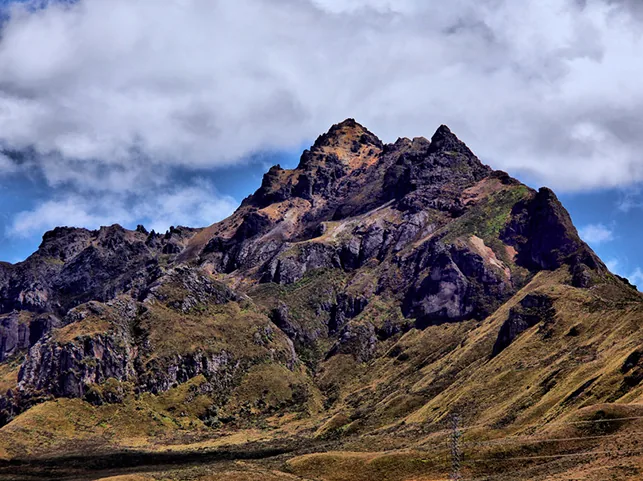
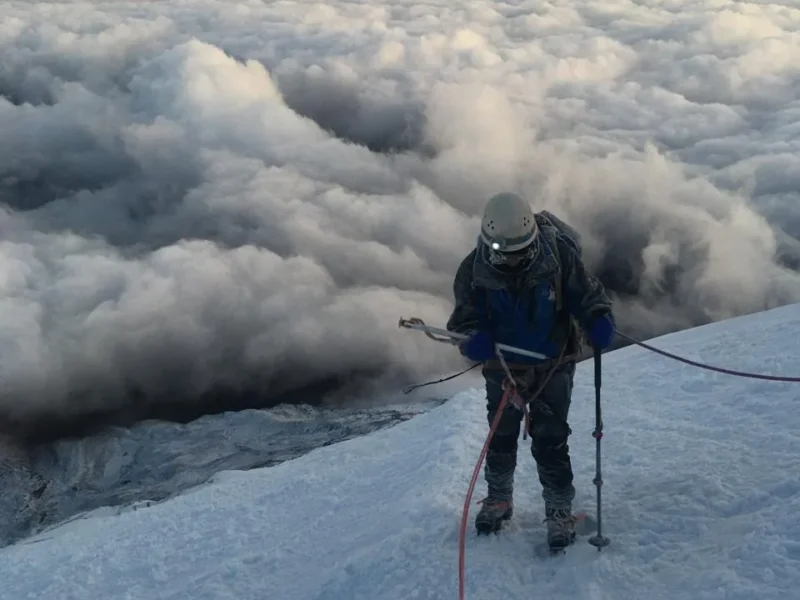
The highlands are the easiest of the four to sample, because the volcano corridor starts just south of Quito. Cotopaxi is the headline: 5,897 m, the highest active volcano in the world. On top of that, its national park is the second most visited protected area in Ecuador after the Galapagos.
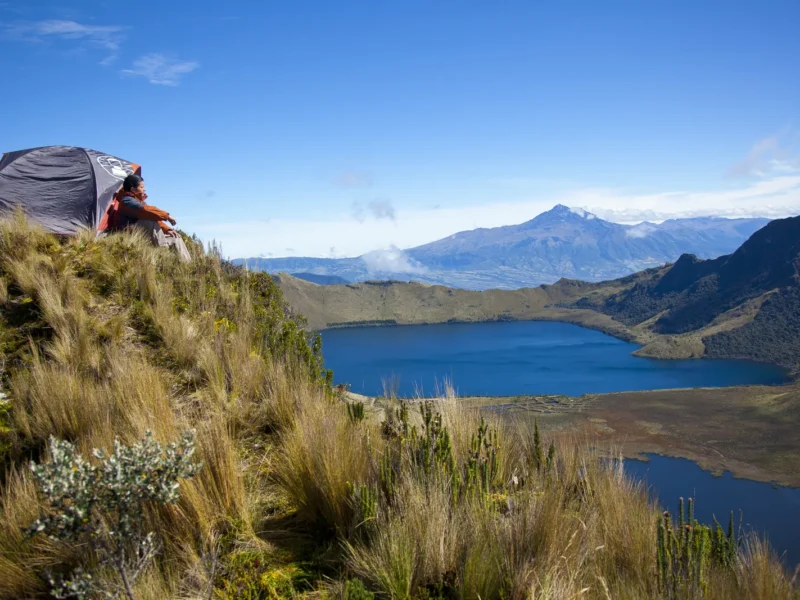
On our Cotopaxi Hike and Bike, the transport drives all the way to the parking lot at 4,600 m. So the hard altitude gain happens sitting down. From there you walk up to the Jose Rivas refuge at 4,800 m. Then you ride around 45 minutes of downhill track to the Limpiopungo Lagoon at 3,850 m. Ten hours, $61 per person, no technical gear and no experience needed, with bike, helmet, lunch and park permits included. Also, it runs Wednesday, Friday, Saturday and Sunday.
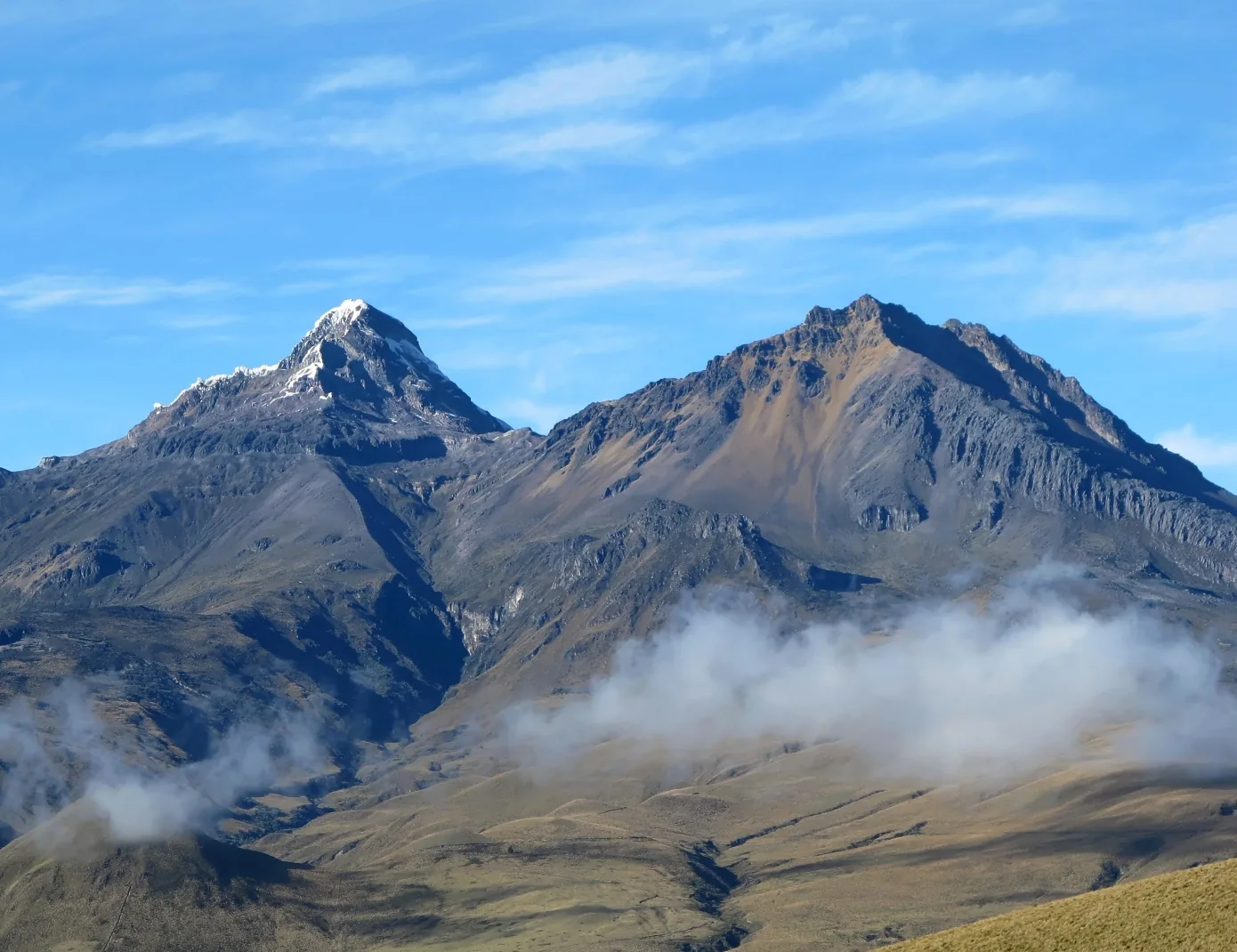
The landscape here is paramo, high grassland above the treeline. Meanwhile, the day opens with an acclimatization stop at 2,945 m that lines up the corridor at once. Pasochoa and Ruminahui stand on one side, Corazon and the Ilinizas on the other.
Cloud forest: the richest wildlife day in the country
West of Quito, the Andes drop away and everything changes: warmer air, permanent mist and more birds than you can keep track of. This western slope explains a large part of why Ecuador appears on every serious birding list. Mindo, in turn, is its accessible end.
Our Mindo Adventure and Sweet is a 12-hour day rated easy. It leaves on Fridays at 7:00 a.m. from Zular Coffee Shop on San Blas Square. The price is $56 per person with transport, bilingual guide and lunch included. During the day you take in a hummingbird farm, a waterfall walk and the tarabita cable car. After that come a canopy zip line and a chocolate factory tasting.
You pay for those activities on site, so you only pay for what you actually do:
- Hummingbird farm: $5
- Tarabita cable car: $3
- Canopy zip line: $10 to $20
- Chocolate factory and tasting: $10
The Amazon: two doors, two different trips
The Ecuadorian Amazon is not one destination, and the river matters more than the number of nights. In fact, we run our own lodges on two of them.
- Cuyabeno. This one sits deep inside the Cuyabeno Wildlife Reserve. You reach it by motorised canoe from Puente Cuyabeno at 11:00 a.m. First, though, you take an overnight bus from Quito or a flight the day before. Expect black-water lagoons, night canoe rides after caimans, and waters where pink river dolphins surface. Cuyabeno Dolphin Lodge is ours.
- The Napo side. Tena Amazon Lodge sits on the Arajuno River near Tena. You meet the boat at the Arajuno River Bridge at 12:00 and reach the lodge 20 minutes later. Also, departures run any day of the week.
The four-day Cuyabeno Jungle and Community Tour is our best seller. It brings a three-hour hike through primary forest and an afternoon paddling a traditional canoe across the lagoons. On top of that, you spend a full day with the Siona community of Tarabeaya. There you prepare casabe and sit down with the shaman. The price includes all meals, rubber boots and rain gear. Also, every excursion goes out with a bilingual naturalist guide.
On the Napo side, three days on the Arajuno River costs $243 per person. This trip leans into culture and cacao. For example, you get dawn birdwatching at a saladero clay lick, plus the Pañayaku reserve and Caiman Island. Then comes an afternoon in the Kichwa community of San Bartolo Sharayaku, with chicha, dances and a shared pambamesa meal. Finally, a workshop lets you dry, roast, grind and taste the cacao yourself.
Galapagos: where the animals do not move away
Nothing prepares you for how close the wildlife lets you get. There are two ways to do the islands.
Island hopping means sleeping on land and heading out by yacht each morning. Our five-day Santa Cruz and Isabela programme includes wild giant tortoises in the El Chato highlands. It also brings snorkelling off Pinzon or Santa Fe with white-tip reef sharks, sea turtles and sea lions. On top of that, you visit the Tintoreras islet and the wetlands with the biggest flamingo population in Galapagos. The lava arches of Los Tuneles close the list. The price covers your hotel, snorkel gear and a naturalist guide licensed by the national park.
A cruise means waking up somewhere new every morning instead. For example, the Aida Maria runs seven itineraries from 4 to 15 days with all meals on board.
Either way, budget for the fees. The Galapagos National Park entrance is USD 200 and the Transit Control Card USD 20. You pay both separately. Also, the trip does not include flights to the islands.
How many days nature lovers need in Ecuador
- Andes: one day puts you on a volcano and back.
- Cloud forest: one full day, and it pairs well with a highland day – opposite climates.
- Amazon: three days is the minimum that still feels like the jungle. Four is where it stops being a visit.
- Galapagos: five days is the realistic floor, on a separate flight and a separate budget.
What to pack for four climates
The lists barely overlap, so pack per trip rather than per country:
- Cotopaxi: warm layers, a windbreaker, gloves and neck and ear protection, sunscreen and comfortable shoes for mountainous, sandy terrain.
- Mindo: comfortable clothes and shoes, a sun hat, sunscreen, mosquito repellent, a swimsuit and a change of clothes.
- Amazon: long-sleeved shirts, trousers that are not jeans, a torch with spare batteries, repellent and dry bags. Rubber boots in EU sizes 34 to 45 and rain gear come with the tour.
- Galapagos: reef-safe sunscreen, a quick-dry change of clothes and a windbreaker for the boat crossings. Also bring your passport for the Transit Control Card, plus cash – there are no ATMs on Isabela.
Build the route with the operator
We are an Ecuadorian operator based in Quito, and in the Amazon we own the lodges you sleep in. So the guide, the canoe, the kitchen and the bed answer to the same team. Start with a day on Cotopaxi or in Mindo, then look through the rest of our tours from Quito. You can also send us a WhatsApp at +593 98 094 2338. After that, we will put the four worlds in an order that fits your dates.